Pianist Wedding Reception: Your Complete 2026 Guide
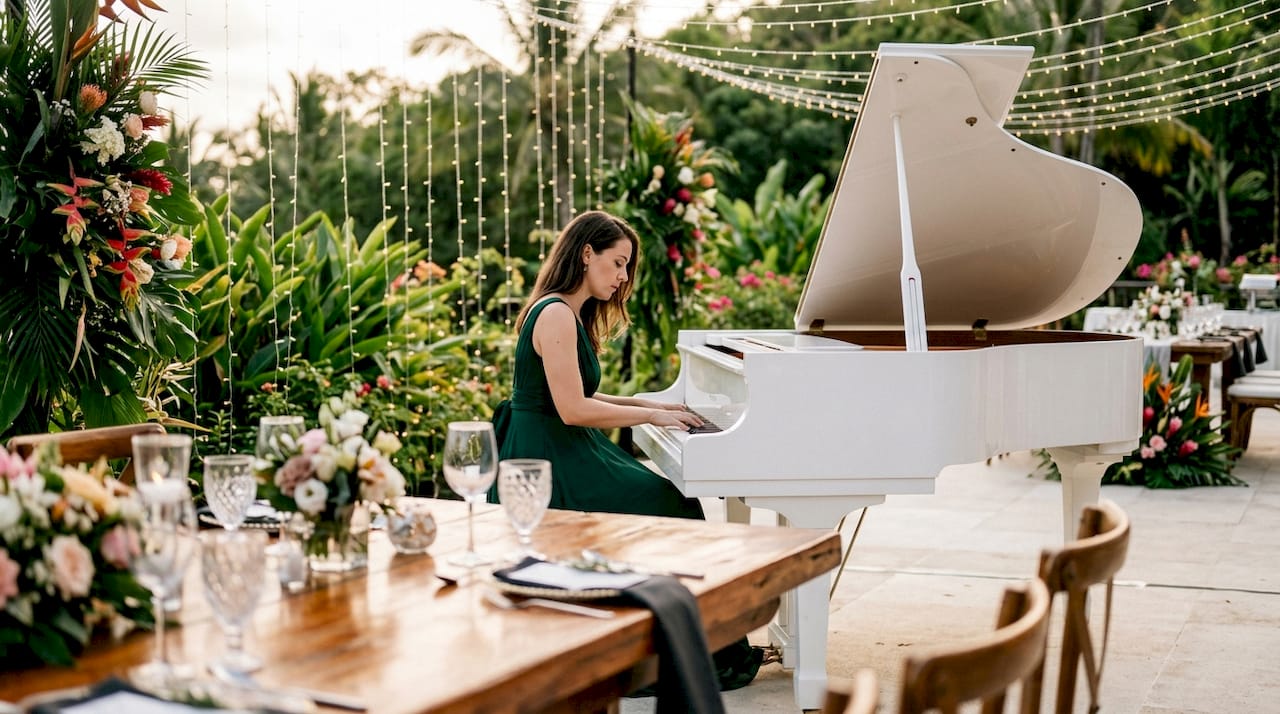
A pianist wedding reception is defined as a live piano performance woven through each phase of your wedding celebration, from cocktail hour through dinner and dancing. Live piano sets an elegant, romantic tone that recorded music and DJ sets rarely match. A classical pianist wedding creates a fully personalized soundtrack, adjusting tempo, style, and song length in real time to match the mood in the room. For couples planning their 2026 wedding, hiring a live pianist is one of the most effective ways to make the reception feel genuinely memorable rather than generic.
How to plan your pianist wedding reception music
Music planning for a live pianist starts with understanding the distinct phases of a reception and what each one needs musically.
Cocktail hour
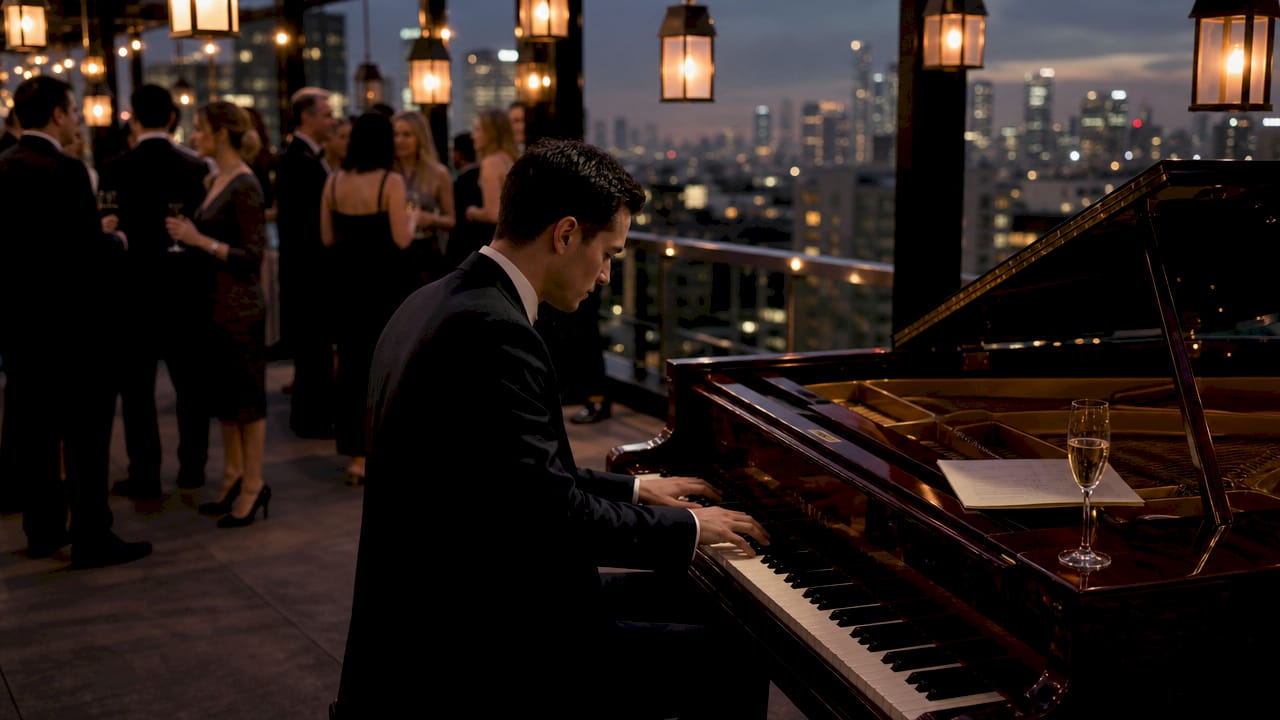
The cocktail hour runs 45–90 minutes and calls for 80–110 BPM music. That tempo range keeps the energy social and upbeat without drowning out conversation. Plan for 15–30 songs during this phase. Think jazz standards, light pop arrangements, and bossa nova interpretations of familiar songs.
Dinner service
Dinner music drops slightly to 90–110 BPM to let guests talk comfortably. This is where a pianist shines. A live performer can stretch a song by 30 seconds or cut a verse to match the pace of service, something a playlist simply cannot do. Aim for 20–25 songs across a 60–90 minute dinner.
Dancing transitions
As the reception moves toward dancing, tempo climbs from 110–125 BPM in the early dancing phase up to 135 BPM at peak energy. A pianist can bridge these phases by shifting from ballads into more rhythmic arrangements, signaling to guests that the energy is building.
For a five-hour reception, plan 150–200 songs total across all phases. Only about 80–100 will actually be played, but having extra songs gives your pianist the flexibility to respond to the room.
Pro Tip: Give your pianist a ranked must-play list of 10–15 songs, not just a general genre preference. Specific song titles help the pianist prepare custom arrangements that feel personal rather than generic.
Reception phase | Duration | Song count | Tempo range |
Cocktail hour | 45–90 min | 15–30 songs | 80–110 BPM |
Dinner service | 60–90 min | 20–25 songs | 90–110 BPM |
Early dancing | 30–45 min | 15–20 songs | 110–125 BPM |
Peak dancing | 30–60 min | 15–25 songs | 125–135 BPM |
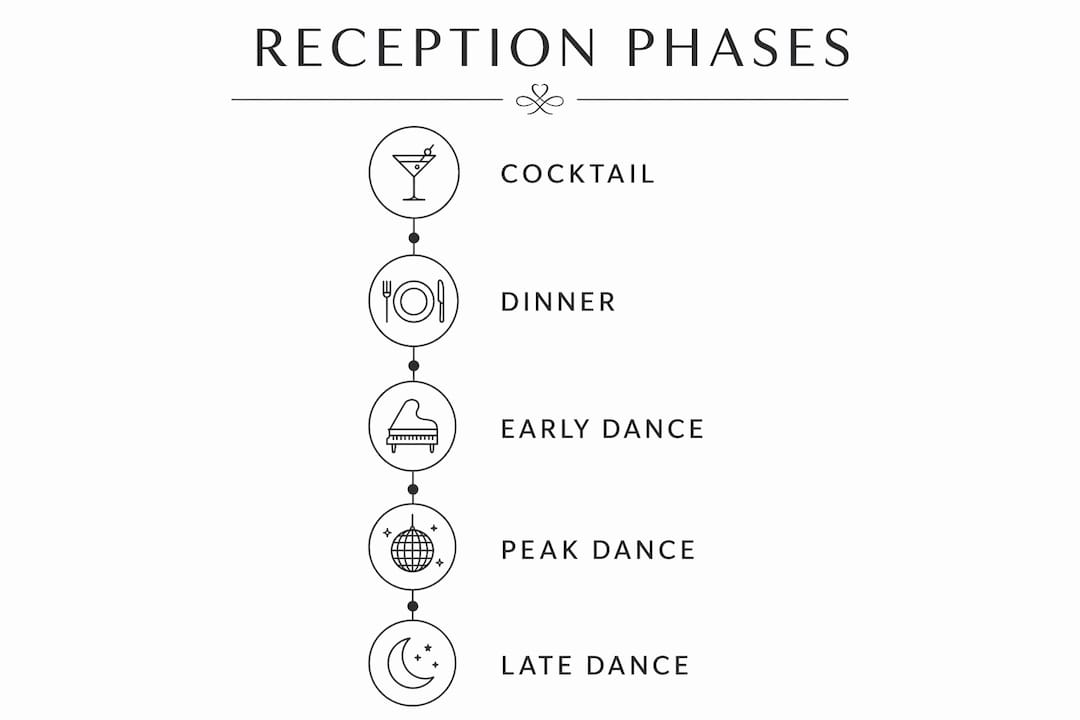
Work with your pianist to build a ceremony to reception flow that feels continuous rather than choppy. Transitions between phases are where most couples lose momentum, and a skilled pianist handles them naturally.
Why live piano music outperforms other wedding entertainment options
Live piano music offers advantages that go beyond sound quality. The core difference is responsiveness. A pianist reads the room and adjusts in real time. A DJ or a playlist cannot do that.
Live piano adds warmth and elegance that recorded music cannot fully replicate. Guests feel the difference even if they cannot articulate it. The acoustic resonance of a piano fills a room differently than a speaker, and the visible presence of a performer creates a focal point that elevates the entire space.
Live pianists can also time processional and recessional music precisely by looping or extending phrases to match the pace of the wedding party walking down the aisle. That kind of real-time adjustment prevents the awkward silence that happens when a recorded track ends too early or plays too long.
Here is how the main entertainment options compare across the factors that matter most at a wedding reception:
Factor | Live pianist | DJ | Recorded playlist |
Real-time timing adjustments | Yes | Limited | No |
Custom song arrangements | Yes | No | No |
Guest interaction | High | Moderate | None |
Acoustic ambiance | Warm, natural | Amplified | Amplified |
Flexibility for requests | Yes | Yes | No |
Visual presence | Strong | Moderate | None |
For couples weighing all their options, the DJ vs. live entertainment decision often comes down to the atmosphere they want. A DJ excels at high-energy dance floors. A live pianist excels at creating intimacy and elegance throughout the full arc of the reception.
Pro Tip: If you want both a pianist and a DJ, schedule the pianist for cocktail hour and dinner, then bring in the DJ for dancing. That combination gives you elegance during the intimate moments and high energy when the floor opens.
How to build the perfect song list for your reception pianist
Song selection is where most couples underinvest their planning time. The right list does two things: it sets the emotional tone and it builds energy naturally across the reception.
Popular piano wedding songs span eras and genres. Classics like “La Vie en Rose” and modern favorites like “A Thousand Years” and “Turning Page” appear consistently on wedding reception playlists because they carry genuine emotional weight. A skilled pianist can arrange any of these in multiple styles, from a delicate solo version to a fuller, more rhythmic interpretation.
Here are strong starting points for each phase:
Cocktail hour: “La Vie en Rose,” “The Way You Look Tonight,” “Fly Me to the Moon,” “Can’t Help Falling in Love” (jazz arrangement), “All of Me”
Dinner: “A Thousand Years,” “Turning Page,” “Bless the Broken Road,” “Make You Feel My Love,” “Clair de Lune”
First dance: “At Last,” “Thinking Out Loud,” “Perfect,” “Grow Old with You”
Late reception: Upbeat pop arrangements, Motown classics, contemporary hits in piano style
The do-not-play list matters as much as the must-play list. Songs about heartbreak, betrayal, or lost love can feel jarring at a wedding even when the melody is beautiful. “Someone Like You” by Adele is a common example. The melody is stunning, but the lyrics are about a relationship that ended. Write out your do-not-play list explicitly and share it with your pianist before the event.
Professional pianists often prepare multiple arrangements of a single song to suit different moments. Your first dance song might appear as a slow, intimate version early in the evening and as a brighter, faster arrangement later. That kind of flexibility is only possible with a live performer.
Pro Tip: When building your song list, think in terms of emotional arcs, not just song titles. Start soft and warm, build through dinner, and peak during dancing. Share that arc with your pianist so they understand the intention behind each choice.
For a deeper look at structuring your list, the guide on building your wedding song list covers the full process from first song to last.
What to know before hiring a wedding pianist
Booking a pianist involves more than finding someone who plays well. The logistics matter just as much as the talent.
Budget for the right range. Wedding pianists typically charge around $1,000–$1,200 depending on season, duration, and location. Peak season weekends in major markets run toward the higher end. Off-peak dates and shorter sets cost less.
Ask about their repertoire depth. A pianist who knows 50 songs will struggle with a five-hour reception. Ask specifically how many songs they have prepared and whether they can learn new material before your date.
Confirm the instrument situation. Venue piano availability varies widely. Some venues have a grand piano on site. Others have nothing. If your venue has no piano, your pianist may bring a high-quality keyboard with amplification, but the acoustic character of the sound will differ. Clarify this before signing a contract.
Get everything in writing. A solid contract covers the performance duration, setup and breakdown time, song list expectations, deposit amount, and cancellation terms. Never book a pianist without a written agreement.
Coordinate with your other vendors. Your pianist needs to know when the caterer plans to start dinner service, when the first dance is scheduled, and when the DJ (if applicable) takes over. Share the full reception timeline with your pianist at least two weeks before the event.
Pro Tip: Ask your pianist for a short video of a recent live performance, not just a studio recording. Live performance quality tells you far more about how they will sound in your venue.
Key takeaways
A live pianist at your wedding reception creates an atmosphere that recorded music and DJ sets cannot replicate, because live performance responds to the room in real time.
Point | Details |
Plan by phase | Map cocktail hour, dinner, and dancing separately with distinct tempo targets for each. |
Song count matters | A five-hour reception needs 150–200 songs prepared; expect about 80–100 to be played. |
Do-not-play list | Write out songs to avoid explicitly; lyrics that contradict a wedding’s tone disrupt the mood. |
Confirm the instrument | Ask whether the venue has a piano or whether the pianist brings their own before booking. |
Coordinate vendors | Share the full reception timeline with your pianist at least two weeks before the event. |
What I’ve learned from playing hundreds of wedding receptions
The detail couples most consistently overlook is the transition between cocktail hour and dinner. Guests move from standing and mingling to sitting and settling, and the music needs to shift with them. A tempo drop of even 10–15 BPM signals that the energy is changing without anyone needing to announce it. When I get that transition right, the room settles naturally. When it gets skipped, guests feel a subtle awkwardness they cannot name.
The second thing I have noticed is that couples who communicate openly with their pianist get dramatically better results. A list of 200 songs with no context is harder to work with than a list of 30 songs with notes on why each one matters. When I know that a particular song was playing when a couple got engaged, I play it differently. That context shapes the performance.
Live piano also creates moments that couples do not anticipate. Guests who recognize a song will often lean toward each other and smile. Older guests light up when they hear a standard they know. Those small reactions ripple through the room and build the kind of warmth that photographs cannot fully capture. That is the part of live music that no playlist can manufacture.
My honest advice: do not treat the pianist as background noise. Treat them as a collaborator. The more you share about your vision, your guests, and the emotional arc you want, the more the music will feel like it was written for your day.
— Petra
Live piano for your wedding reception with Platinumpianist
Platinumpianist specializes in live piano entertainment for weddings, private parties, and upscale events throughout Southern California. Petra brings her own piano to every event, which means the acoustic quality is consistent regardless of what the venue provides.
For couples planning a wedding in the Los Angeles area, Platinumpianist offers custom song arrangements, personal consultations before the event, and full coordination with your venue and vendors. Whether you need a pianist for cocktail hour, a full reception set, or both, the service is built around your specific timeline and vision. View availability and learn more about Beverly Hills wedding pianist services to start planning your reception music today.
FAQ
How many songs does a wedding reception pianist need?
A five-hour reception requires 150–200 songs prepared, with roughly 80–100 actually played. Having extra songs gives the pianist flexibility to respond to the room and handle requests.
What is the right tempo for wedding reception piano music?
Cocktail hour runs 80–110 BPM, dinner drops slightly to 90–110 BPM, and dancing builds from 110 BPM up to 135 BPM at peak energy. Tempo progression signals mood shifts to guests naturally.
How much does a wedding reception pianist cost?
Wedding pianists typically charge around $1,000–$1,200 depending on season, duration, and location. Peak season weekend events in major markets run toward the higher end of that range.
Does the venue need to have a piano?
No. If a venue has no piano, a pianist may bring a high-quality keyboard with amplification. The acoustic character differs from a grand piano, so confirm the instrument situation with your pianist before booking.
What should go on a do-not-play list for a wedding pianist?
Songs about heartbreak or betrayal should be excluded even when the melody is beautiful. Write out specific song titles and share the list with your pianist well before the event.
Recommended


