Why Live Music Makes Your Wedding Truly Memorable
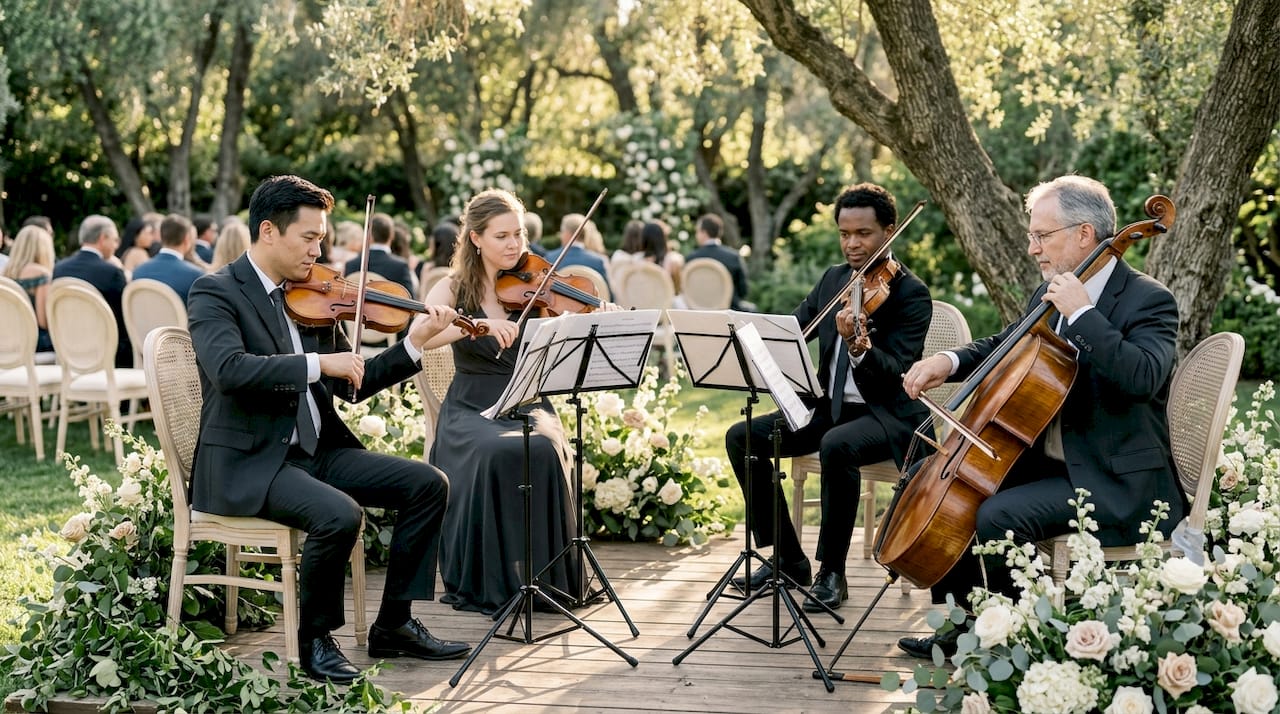
Live music is the single most powerful tool for creating wedding memories that guests carry with them for decades. While a DJ delivers variety and volume control, a live performer creates something no playlist can replicate: a shared human experience that bonds everyone in the room. Research from Northeastern University confirms that live music drives stronger neural coupling between performers and listeners than recorded music does. That neurological difference is exactly why live music wedding memorable moments feel so vivid, so emotional, and so distinctly yours.
Why live music makes weddings more memorable
The science behind live music’s impact on memory is more concrete than most couples realize. A Northeastern University EEG study with 21 participants found that live violin performances produced measurably higher brainwave synchronization and self-reported engagement compared to the same music played as a recording. That synchronization matters because it signals deeper cognitive and emotional processing. When your brain is more engaged, it encodes the experience more vividly.
Emotional intensity is the other critical variable. Research published via AOL Health found that strong emotional responses to music promote memory of the broad event gist, while moderate emotional responses allow recall of more specific details. This means the emotional arc of your wedding music directly shapes what your guests remember and how richly they remember it. A live performer who reads the room and builds intensity at the right moments is, in effect, programming your guests’ long-term memories.
Sociologists call the group bonding that happens at live events “collective effervescence,” a term coined by Émile Durkheim to describe the electric sense of shared experience in a crowd. Live music at weddings triggers exactly this response. Studies on group events confirm that live music produces stronger emotional connection and wellbeing benefits that persist for up to a week after the event. Your guests will not just remember your wedding. They will feel good about it days later.
“Live performances cause stronger neural engagement than recordings, which may explain why live music feels more immersive and memorable.” — Northeastern University research team
The benefits of live music weddings extend beyond the couple to every person in attendance. When a performer responds to the crowd, speeds up during a toast, or softens during a quiet moment, those real-time adjustments create micro-memories that a static playlist simply cannot generate.
Live music vs DJ wedding: what actually changes for your guests
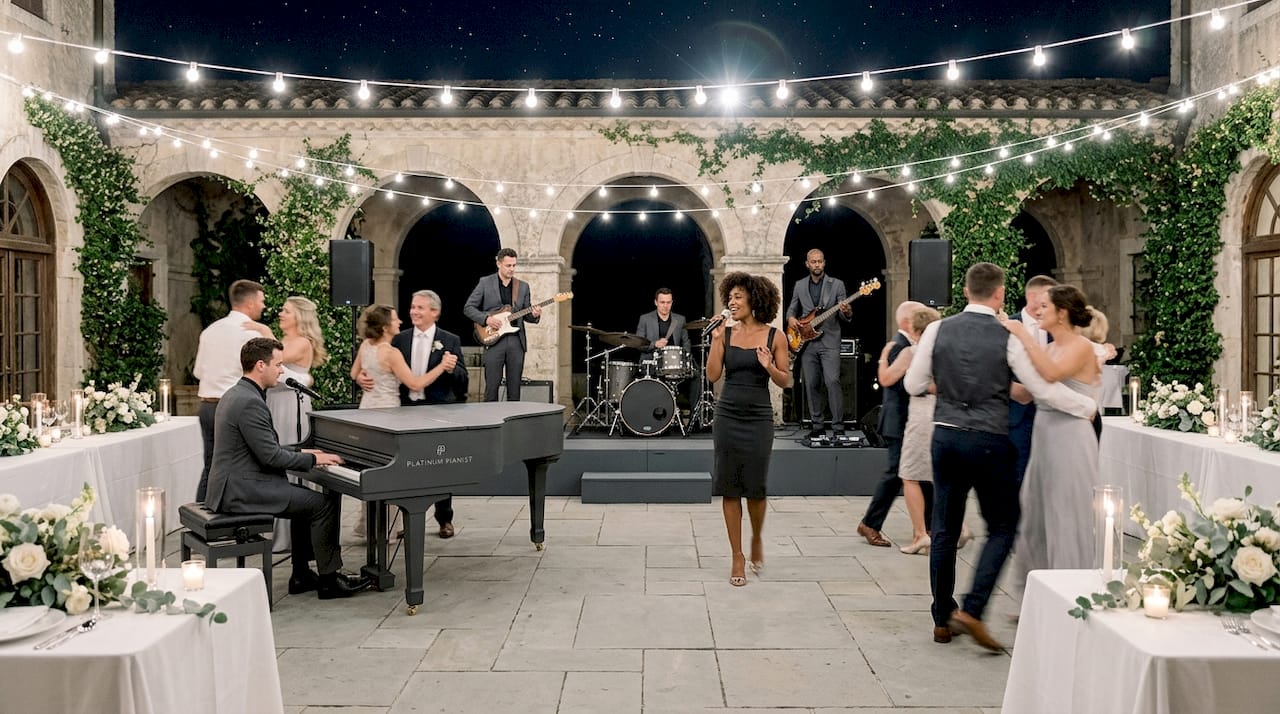
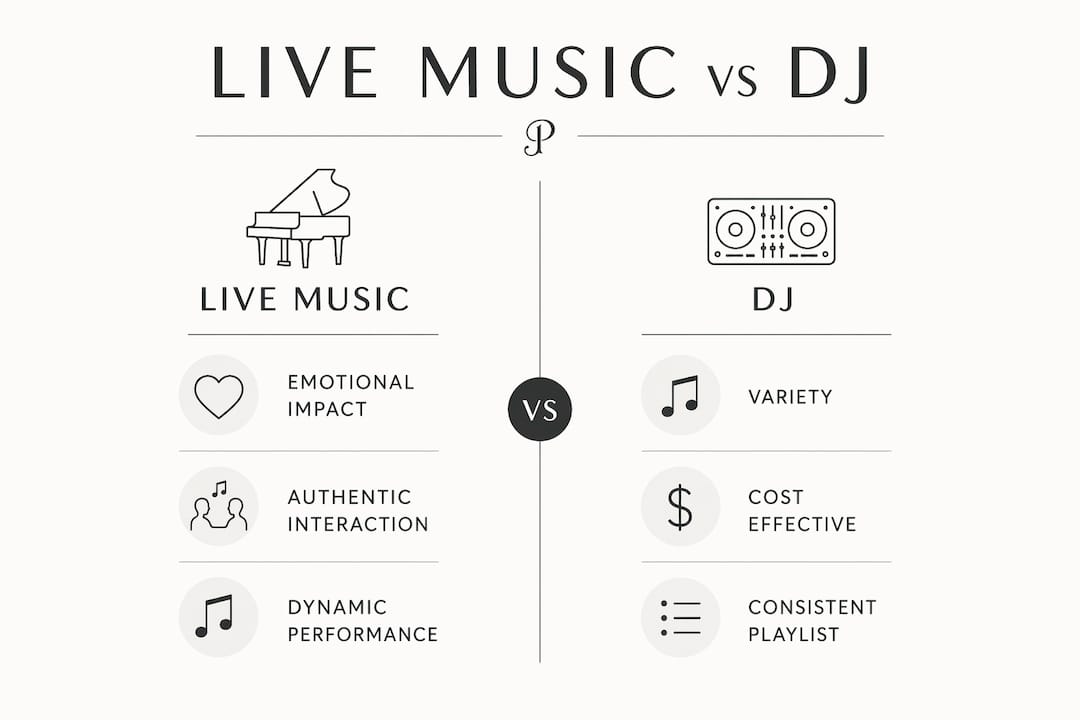
The most honest comparison between a live band and a DJ comes down to authenticity versus variety. A DJ brings an essentially unlimited track library and precise digital control over pacing. A live band or pianist brings visible human effort, real-time crowd reading, and the irreplaceable energy of watching someone perform.
Factor | Live music | DJ |
Emotional impact | Higher neural engagement and emotional intensity | Consistent but less visceral |
Flexibility | Adapts energy and setlist in real time | Switches tracks instantly, broad catalog |
Visual experience | Visible performance creates focal point | Booth presence, lighting effects |
Average U.S. cost | $1,800 average | |
Memorability | Guests recall event more vividly | Guests recall specific songs more easily |
The average band costs roughly 150% more than a DJ in the United States. That is a real budget consideration, and it is one reason why many couples use a hybrid approach. The cost gap is significant, but so is the experiential gap. When guests describe a wedding as “incredible” or “unlike anything I’ve been to,” a live performer is almost always part of that story.
Live bands also interact with the crowd and alter setlists dynamically, which creates unique moments that cannot be repeated or replicated. A DJ’s programming is fixed by what exists in a digital library. A live musician’s performance is shaped by the specific energy of your specific guests on your specific day.
Pro Tip: If your budget is tight, prioritize live music for the ceremony and cocktail hour, where emotional intensity matters most, and use a DJ for the reception dance floor. You get the memorable live moments without paying for full-night band coverage.
How emotional intensity shapes what guests remember
Not all wedding memories are created equal, and the type of emotional response your music triggers determines what kind of memory forms. The JNeurosci-adjacent research on emotional intensity and memory reveals a clear pattern: high-intensity emotional moments encode the big picture, while moderate emotional moments encode specific details. A skilled live performer can move between these registers deliberately.
Here is how to think about building an emotional arc across your wedding day:
Ceremony processional: Use a slower, emotionally rich piece to create high-intensity gist memories. Guests will remember the feeling of watching you walk down the aisle, even if they cannot name the song.
Cocktail hour: Shift to moderate-intensity background music. This is where guests form detailed memories of conversations, laughter, and connection. A pianist playing jazz standards at low-to-medium volume is ideal here.
First dance: Return to high emotional intensity with a personally meaningful song performed live. The combination of personal significance and live performance creates one of the most durable memories of the entire event.
Reception: Vary intensity deliberately. Build toward peaks during key toasts or group dances, then pull back to let guests breathe and form detail-level memories between moments.
Personalization amplifies every one of these effects. When a musician learns your song, arranges it specifically for your wedding, and performs it live, the emotional resonance is categorically different from pressing play on Spotify. That personalized live performance is what transforms a wedding from an event into an experience guests describe for years.
Music memorability is less about genre and more about the emotional intensity your guests feel in the moment. A beautifully performed classical piece can be more memorable than a popular chart hit if the performance creates stronger emotional engagement.
Practical ways to integrate live music into your wedding
Bringing live music into your wedding does not require a full orchestra or a six-piece band. The most effective strategies match the scale of the performance to the scale of the moment.
Ceremony coverage: A solo pianist, string quartet, or acoustic guitarist covers the prelude, processional, and recessional. These are the three highest-stakes musical moments of the day, and live performance here creates the strongest emotional impact per dollar spent.
Cocktail hour: A solo performer playing background music during cocktail hour is one of the most cost-effective ways to add live music. Guests mingle, the performer sets tone, and the atmosphere feels curated rather than generic.
Reception highlights: If budget allows, bring the live performer back for the first dance and parent dances. These are the moments guests photograph and share. A live performance in those photos signals quality and intentionality.
Hybrid model: Combining live music for ceremony and cocktail hour with a DJ for the reception is the most popular budget-conscious strategy among couples who want both memorability and dance-floor energy.
Selecting the right performer matters as much as the format. The Knot’s 2026 Real Weddings Study found that over 50% of couples prioritize personality when hiring wedding entertainers. Chemistry between the performer and the couple directly affects how well the music serves the event. A technically skilled musician who does not understand your vision will deliver a technically correct but emotionally flat performance.
Pro Tip: When auditioning live musicians, ask them to play a song you did not request and watch how they interpret it. Their instinctive choices reveal their musical personality far better than a prepared demo does.
The importance of live music at weddings also shows up in how it frames the entertainment as a reflection of who you are as a couple. A pianist who plays Debussy during cocktail hour tells your guests something specific about your taste and values. A DJ playing a generic playlist tells them nothing.
Key takeaways
Live music makes weddings memorable because it triggers stronger brainwave synchronization, deeper emotional intensity, and real-time human connection that recorded music cannot replicate.
Point | Details |
Neuroscience backs live music | EEG research shows live performances create higher neural coupling and engagement than recordings. |
Emotional intensity shapes memory | High-intensity musical moments encode vivid gist memories; moderate moments encode specific details. |
Live music costs more but delivers more | Bands average $4,500 vs. $1,800 for DJs, but create distinctly stronger guest memories. |
Hybrid strategies work well | Live music for ceremony and cocktail hour paired with a DJ for reception balances budget and impact. |
Performer personality matters | Over 50% of couples prioritize chemistry with entertainers, which directly affects emotional impact. |
What I’ve learned from playing weddings live
After performing at weddings across Southern California, I can tell you the moment that surprises couples most is not the first dance. It is the cocktail hour. Guests who were strangers an hour earlier are suddenly talking, laughing, and leaning in to listen. The music does that. A playlist does not create that pull because there is no human presence to draw people toward.
The most common misconception I hear from couples is that a DJ is “basically the same” as a live musician but cheaper. That comparison misses the point entirely. A DJ manages sound. A live performer creates atmosphere. Those are different jobs with different results. I have watched guests who planned to stay for an hour end up closing down a reception because the energy of a live performance kept pulling them back to the room.
What couples often overlook is the value of a performer who can improvise. When a toast runs long, when a family member needs a moment, when the energy in the room shifts unexpectedly, a live musician adjusts in real time. A playlist does not. That real-time adaptability is what separates a good wedding from a great one.
My honest advice: do not treat music as a line item to minimize. Treat it as the emotional infrastructure of your entire day. Every other vendor serves a function. Your musician creates the feeling that makes every other moment land.
— Petra
Bring your wedding to life with Platinumpianist
Platinumpianist brings live piano entertainment directly to your wedding venue across Southern California, with a grand piano transported and set up on-site for a truly polished experience. Whether you need a pianist for your ceremony processional, cocktail hour, or reception highlights, Platinumpianist tailors every performance to your vision, your songs, and the emotional arc of your day. Couples in Los Angeles, Beverly Hills, and Orange County trust Platinumpianist to deliver the kind of live music experience that guests talk about long after the last dance. Explore wedding music services or connect directly to discuss your date and vision.
FAQ
Why does live music make weddings more memorable than a DJ?
Live music creates stronger brainwave synchronization and emotional intensity than recorded music, according to Northeastern University EEG research. That deeper neural engagement encodes wedding moments more vividly in guests’ long-term memory.
How much does a live wedding band cost compared to a DJ?
The Knot reports the average U.S. wedding band costs $4,500 while a DJ averages $1,800. Couples who want live music on a tighter budget often use a live musician for the ceremony and cocktail hour, then switch to a DJ for the reception.
What type of live music works best for a wedding ceremony?
A solo pianist, string quartet, or acoustic guitarist works well for ceremonies because these formats deliver emotional depth without overpowering the space. The key is choosing a performer whose style matches the tone you want guests to feel during the processional and recessional.
Can I combine live music and a DJ at my wedding?
Yes, and it is one of the most practical strategies available. Using live music for the ceremony and cocktail hour, then transitioning to a DJ for the reception dance floor, gives you the emotional impact of live performance at the moments that matter most without the cost of full-night band coverage.
How do I choose the right live musician for my wedding?
Prioritize personality and chemistry alongside technical skill, since over 50% of couples identify performer personality as their top selection factor according to The Knot’s 2026 Real Weddings Study. Ask to hear the musician improvise or play something unrehearsed to gauge their instincts and adaptability.
Recommended


