Wedding Reception Entertainment Timeline Tips That Work
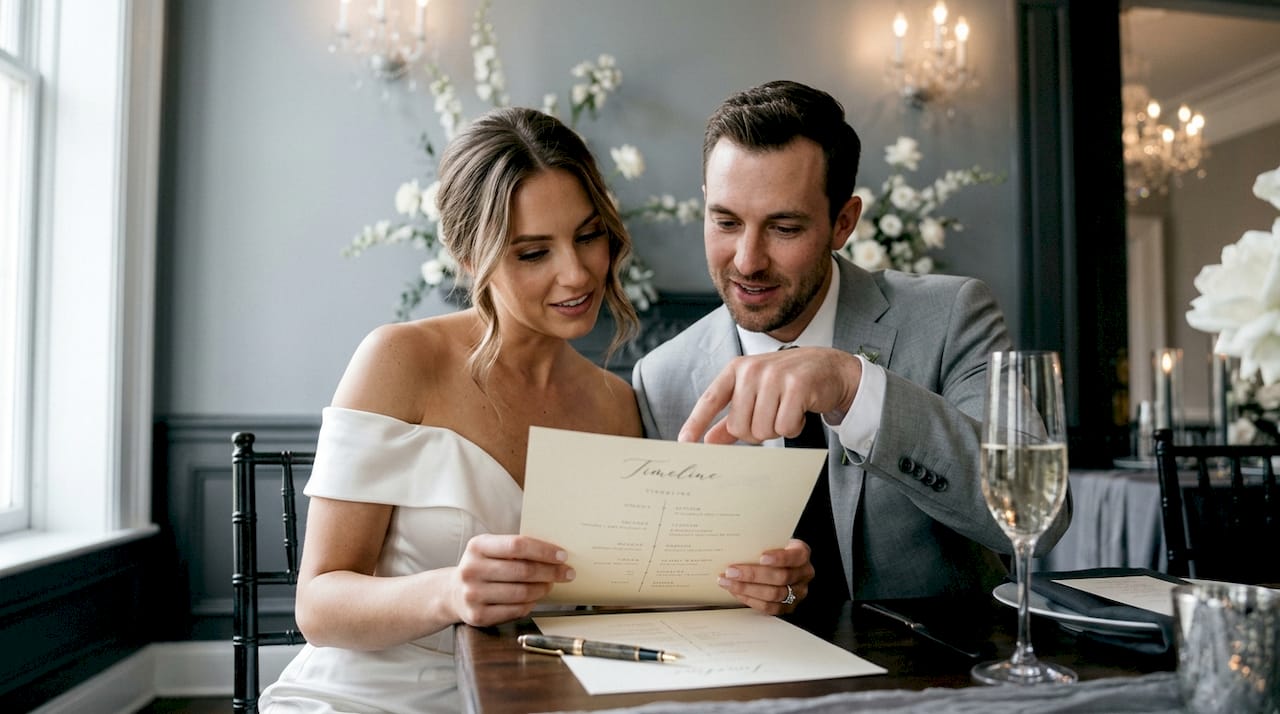
A wedding reception entertainment timeline is the master schedule that maps every performance, activity, and transition across your entire reception evening. Without one, even the most beautiful venue turns into a series of awkward gaps and rushed moments. The best receptions feel effortless to guests precisely because the couple and their vendors planned every segment with intention. These wedding reception entertainment timeline tips will show you how to build a schedule that keeps energy high, guests engaged, and the dance floor packed from the first song to the last.
1. What key elements make up a wedding entertainment schedule?
A complete wedding entertainment schedule includes every formal event, performance, and transition from the moment guests arrive to the final song. Knowing each component upfront prevents you from forgetting critical moments during planning.
Here are the core elements to include in your reception timeline:
Cocktail hour (60–90 minutes): Guests arrive, mingle, and enjoy drinks while you finish photos. A cocktail hour of 90 minutes gives photographers extra time without rushing the couple. Live background music works especially well here.
Grand entrance: The DJ or emcee announces the wedding party and couple. This sets the energy for the entire evening.
First dance: Typically follows the grand entrance immediately while all eyes are already on the couple.
Parent dances: Mother/son and father/daughter dances usually follow the first dance or happen just before dinner.
Dinner service: The longest single block of the evening, usually 60–75 minutes. Toasts and speeches are placed here.
Toasts and speeches: Best man, maid of honor, and family speeches work best during dinner when guests are seated and attentive.
Cake cutting: A short, visual moment that signals a shift in the evening’s energy.
Bouquet and garter toss (optional): These work well as a bridge between dinner and open dancing.
Open dancing: The main entertainment event of the evening, ideally running 90–120 minutes.
Late-night snacks or send-off: A final energy boost before the last dance and formal exit.
Mapping these elements onto a written schedule before you meet with any vendor gives you a clear foundation to build from.
2. How to build buffers and manage realistic timing
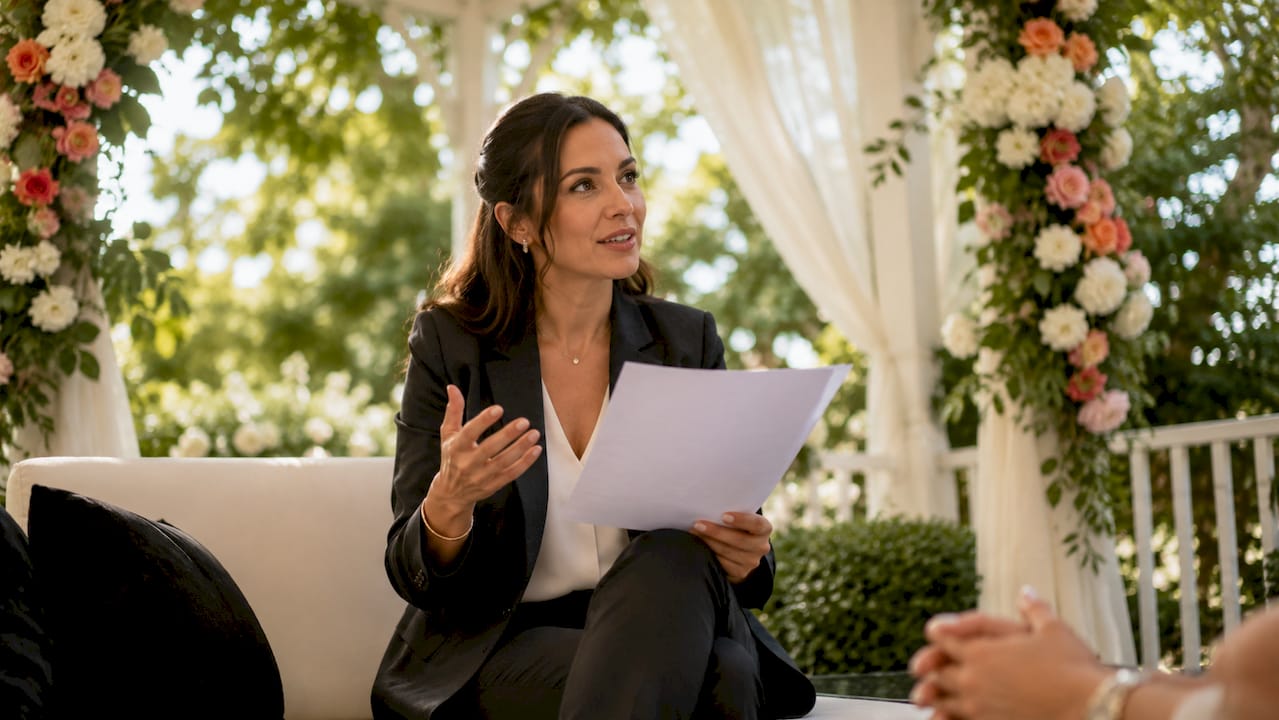
Every wedding runs behind schedule. Weddings typically run 10–15 minutes late due to photography overruns, slow meal service, or guests who need extra time to move between spaces. Failing to plan for this turns a beautiful evening into a stressful sprint.
Build deliberate buffers into three specific places. First, add 10–15 minutes after cocktail hour before the grand entrance. Second, pad dinner by 15 minutes beyond the caterer’s estimate. Third, leave a buffer after speeches before you open the dance floor. These are not wasted minutes. They are the difference between a relaxed evening and a couple checking their watch every 20 minutes.
Guest movement also takes longer than couples expect. Guests need 10–15 minutes to physically transition between spaces, such as moving from a cocktail patio to a ballroom. Build these as “hidden buffers” so the timeline never visibly stalls.
Pro Tip: Share your buffered timeline with your DJ, caterer, and photographer separately. Ask each vendor to flag any segment they think is too tight. Three professional opinions will catch problems you cannot see from the couple’s perspective.
3. What are the best entertainment ideas for downtime periods?
Passive moments during cocktail hour and dinner transitions are where guest energy quietly drops. The 2026 trend in wedding entertainment moves decisively away from passive events toward interactive experiences that keep guests talking and laughing.
Here are the most effective options for filling natural downtime:
Phone-based trivia or prediction contests: Apps like HeyWedding or custom Google Forms let guests answer questions about the couple from their seats. This works brilliantly during dinner when guests are stationary.
Roaming performers: A caricature artist, close-up magician, or even a roaming violinist creates spontaneous moments guests remember for years. Platinumpianist, for example, can perform during cocktail hour and dinner transitions, creating a warm atmosphere that a playlist simply cannot replicate.
Interactive photo stations: A photo booth with props or a digital guest book station gives guests something to do between courses.
Guest-controlled playlist segments: Platforms like Spotify’s collaborative playlist feature let guests add one song each to a designated set. This creates personal investment in the dance floor later.
Icebreaker table cards: Simple printed questions at each table setting spark conversation among guests who do not know each other well.
Pro Tip: Limit interactive activities to one or two per downtime period. Stacking too many options overwhelms guests and dilutes the impact of each one. Pick the activity that best matches your crowd’s age range and energy level.
The shift toward interactive wedding entertainment reflects a broader truth: guests remember how they felt, not what they watched. Designing moments where they participate directly creates stronger memories than any performance they simply observe. You can explore more ideas in this destination wedding entertainment guide for inspiration that travels well to any venue.
4. How to sequence dance floor openings for maximum energy
Dance floor timing is the single most misunderstood element of reception timeline ideas. Most couples treat dancing as one long block at the end of the night. The better approach uses multiple shorter dance segments to maintain momentum.
Here is a proven sequence for an evening reception starting at 6:00 PM:
6:00 PM: Cocktail hour with live background music or a curated playlist.
7:00 PM: Grand entrance, first dance, parent dances (grouped together, 20–25 minutes total).
7:30 PM: Dinner service begins. Speeches happen between courses.
8:30 PM: Cake cutting signals the end of formal events.
8:45 PM: Open dancing begins. This is the target window.
10:00 PM: Brief pause for late-night snacks, then dancing resumes.
11:00 PM: Last dance and send-off.
Formalities completed by 8:30 PM preserve peak guest energy for dancing. This is the window when guests are fed, toasted, and ready to move. Pushing the first open dance set past 9:00 PM means fighting fatigue for the rest of the night.
Grouping the first dance and parent dances together also matters. Spreading them across the evening creates repeated interruptions that kill momentum. One focused 20-minute block of formalities is far less disruptive than three separate two-minute stops across two hours.
Approach | Effect on guest energy |
One long dance block at the end | Guests leave before it starts; floor empties by 10:30 PM |
Multiple short dance segments | Energy resets after each break; floor stays full longer |
Formalities spread across the evening | Constant interruptions reduce dancing momentum |
Formalities grouped before 8:30 PM | Clean transition to open dancing at peak energy |
The DJ’s role as timekeeper is to coordinate music cues with the venue and caterer so each transition happens without visible effort. A great DJ does not just play music. They manage the room’s energy in real time.
5. What are the most common timeline mistakes to avoid?
The most frequent wedding timeline planning mistake is stacking too many formal events in a row. Limiting consecutive seated activities to 3–4 maximum prevents the dance floor from losing momentum before it ever gets started.
Watch for these specific errors:
Delaying the first dance too long: Couples who push the first dance to 9:00 PM or later lose the natural spotlight of the grand entrance. Do it while guests are already watching.
Scheduling speeches after 9:00 PM: Early speeches between 7:30 and 8:30 PM hold guest attention far better. After 9:00 PM, half the room is distracted or on the dance floor.
Ignoring transition time: Moving 150 guests from dinner tables to a dance floor takes real time. Not accounting for this creates a dead zone that kills energy.
Treating dancing as the leftover event: Open dancing is the main event of the evening for most guests. It deserves the best time slot, the best energy, and the most planning attention.
Over-scheduling the first hour: Couples often pack the grand entrance, first dance, parent dances, toasts, and cake cutting into 60 minutes. This leaves guests no time to breathe and creates a frantic pace that feels stressful rather than celebratory.
Failing to account for delays is the single most common mistake wedding professionals report. The fix is simple: build the buffer before you need it, not after the evening has already run off course. For a deeper look at how music sets the mood at each stage, that resource covers the emotional arc of a well-paced evening.
Key takeaways
A well-structured wedding reception entertainment timeline is the foundation of a smooth, energetic evening that guests remember long after the last dance.
Point | Details |
Build deliberate buffers | Add 10–15 minutes after key transitions to absorb inevitable delays. |
Complete formalities by 8:30 PM | Peak guest energy for dancing occurs between 8:30 and 9:00 PM. |
Group formal events together | Clustering dances and speeches prevents repeated interruptions to the dance floor. |
Use interactive entertainment | Trivia, roaming performers, and photo stations keep guests engaged during downtime. |
Treat dancing as the main event | Schedule open dancing at peak energy, not as a leftover block at the end. |
What I’ve learned from planning hundreds of reception timelines
The couples who stress the least on their wedding night are the ones who planned the most before it. That sounds obvious, but the specific thing they planned is not the décor or the menu. It is the timing.
I have played at receptions where the timeline was a single page of bullet points and the evening flowed beautifully. I have also played at receptions with elaborate printed programs that fell apart by 8:00 PM because no one built in buffers. The difference is almost always the buffers and the grouping of formalities.
The advice I give every couple I work with is this: protect your dance floor like it is the most valuable real estate of the evening. Because for your guests, it is. They came to celebrate with you, and dancing is how most people celebrate. Every formal event you schedule after 9:00 PM is a withdrawal from that energy account.
The other thing I have seen change everything is live music during cocktail hour and dinner. A pianist playing in the room creates a social atmosphere that a playlist cannot. Guests talk more, laugh more, and arrive at the dance floor already warmed up. That is not a sales pitch. It is something I have watched happen at reception after reception in Southern California.
Flexibility matters more than perfection. Build a great timeline, share it with every vendor, and then give yourself permission to let the evening breathe. The moments guests remember are rarely the ones you scripted.
— Petra
How Platinumpianist can shape your reception timeline
Planning your entertainment schedule is much easier when you have a live musician who understands reception flow from the inside.
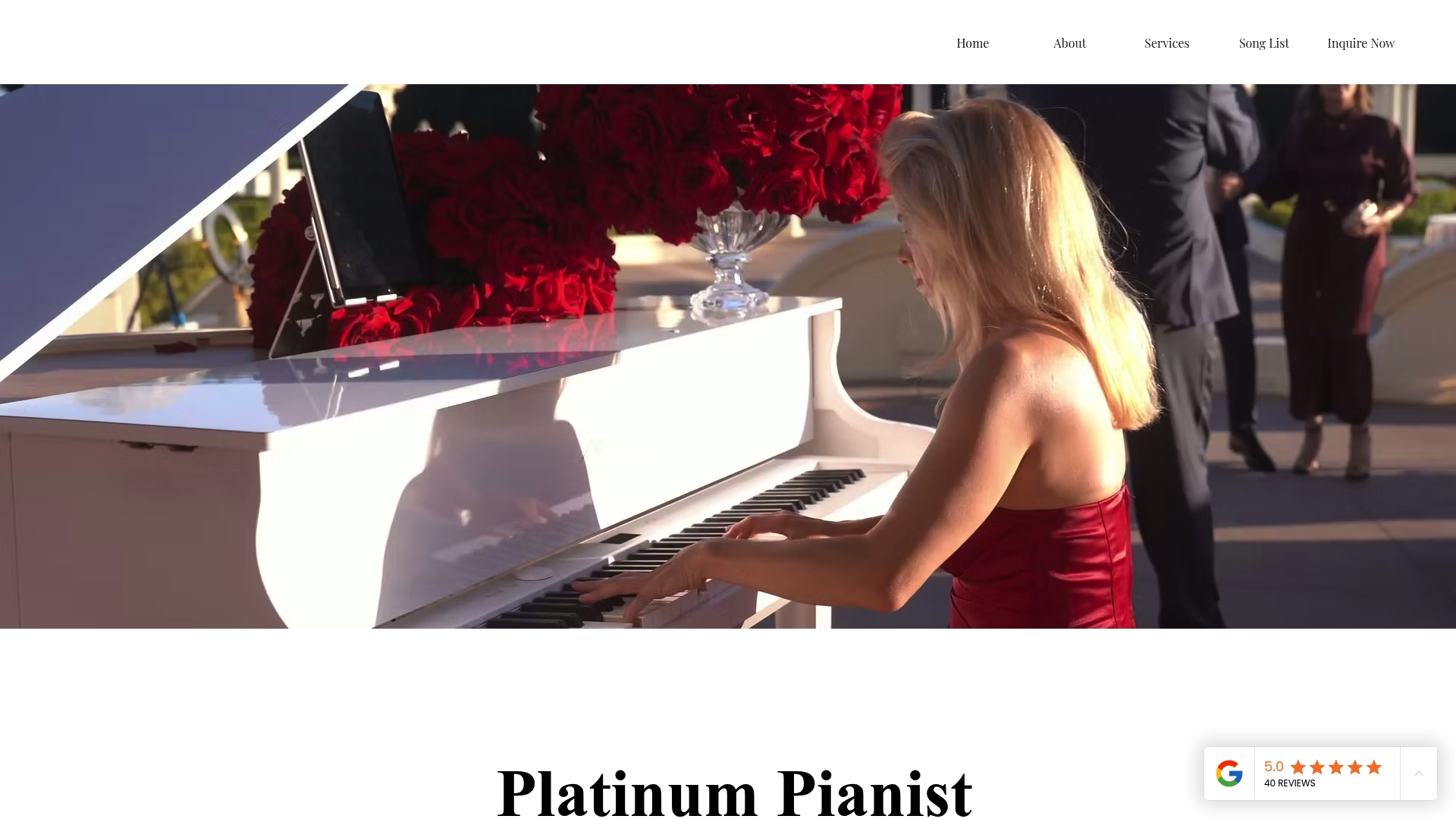
Platinumpianist brings a grand piano directly to your Southern California venue and performs across every segment of your evening, from cocktail hour through dinner and beyond. As a wedding musician, Petra works with your DJ, caterer, and coordinator to hit every cue on time. Whether you need elegant background music during dinner or a dramatic first dance performance, live piano adds a layer of atmosphere that transforms a good reception into an unforgettable one. Reach out to Platinumpianist to discuss how live music fits your specific timeline and venue.
FAQ
What is a wedding entertainment timeline?
A wedding entertainment timeline is a detailed schedule mapping every performance, formal event, and transition across your reception evening. It coordinates vendors, manages pacing, and ensures guests stay engaged from start to finish.
How long should a wedding reception last?
Most wedding receptions run 4–5 hours, with cocktail hour adding another 60–90 minutes before the formal reception begins. This gives enough time for dinner, formalities, and at least 90 minutes of open dancing.
When should speeches happen at a wedding reception?
Speeches work best between 7:30 and 8:30 PM during dinner service. Scheduling toasts after 9:00 PM reduces guest attention and cuts into peak dancing time.
How many entertainment activities should I plan for cocktail hour?
One or two activities work best for cocktail hour. A live musician combined with a single interactive element like a photo station or caricature artist keeps guests engaged without overwhelming the social atmosphere.
How do I keep the dance floor full all night?
Group all formal dances and speeches before 8:30 PM, then open the floor at peak energy. Use multiple shorter dance segments rather than one long block, and avoid scheduling any formal events after the floor opens.
Recommended


