The Role of Pianist at Executive Events: A Planner's Guide
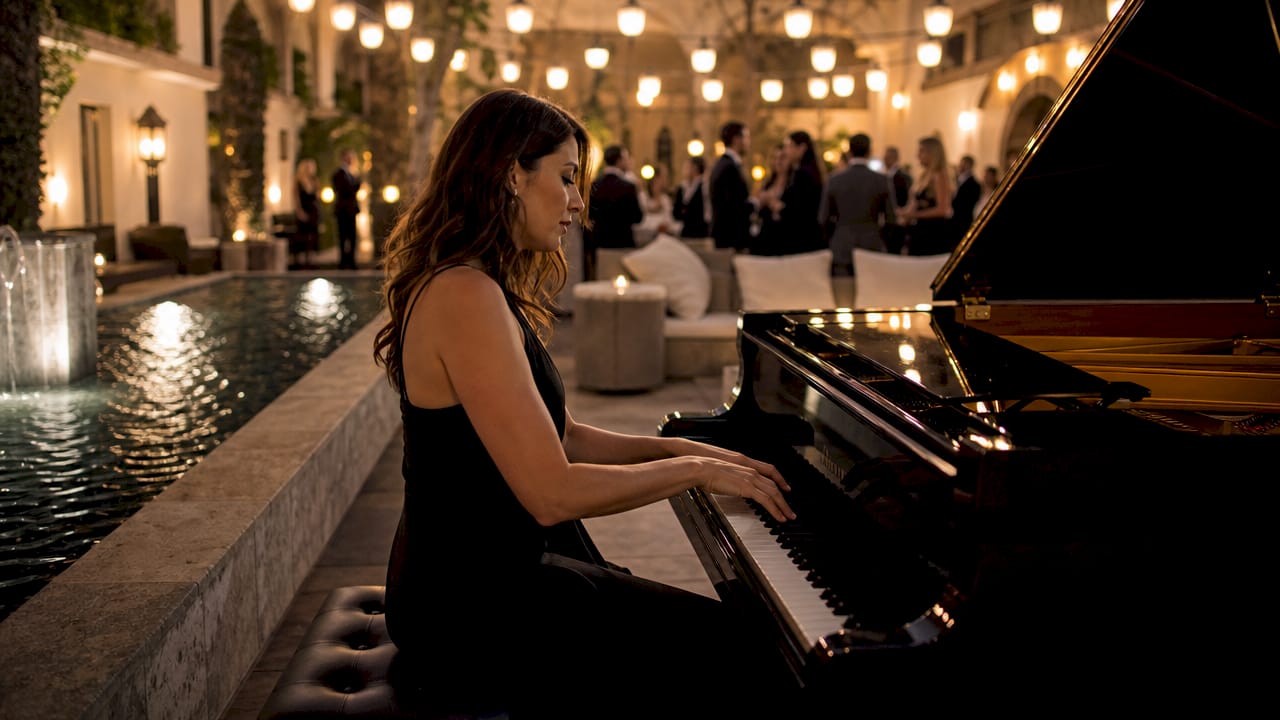
A live pianist at executive events is defined as a professional musician who provides real-time, adaptive music that shapes atmosphere, supports event flow, and engages guests in ways no playlist can replicate. The role of pianist at executive events goes far beyond background music. A skilled pianist reads the room, adjusts tempo and volume on the fly, and coordinates with emcees and event managers to keep every moment polished. Live piano creates a professional atmosphere that supports networking, speeches, and formal dining more effectively than any automated system. For corporate executives and event planners, understanding this role is the first step toward booking entertainment that actually moves the needle on guest experience.
What is the role of pianist at executive events?
A pianist at an executive event functions as a live production asset, not just a performer. The musician controls the sonic environment of the entire event, from the moment guests arrive through the final farewell. That level of control is what separates live piano from a Spotify playlist.
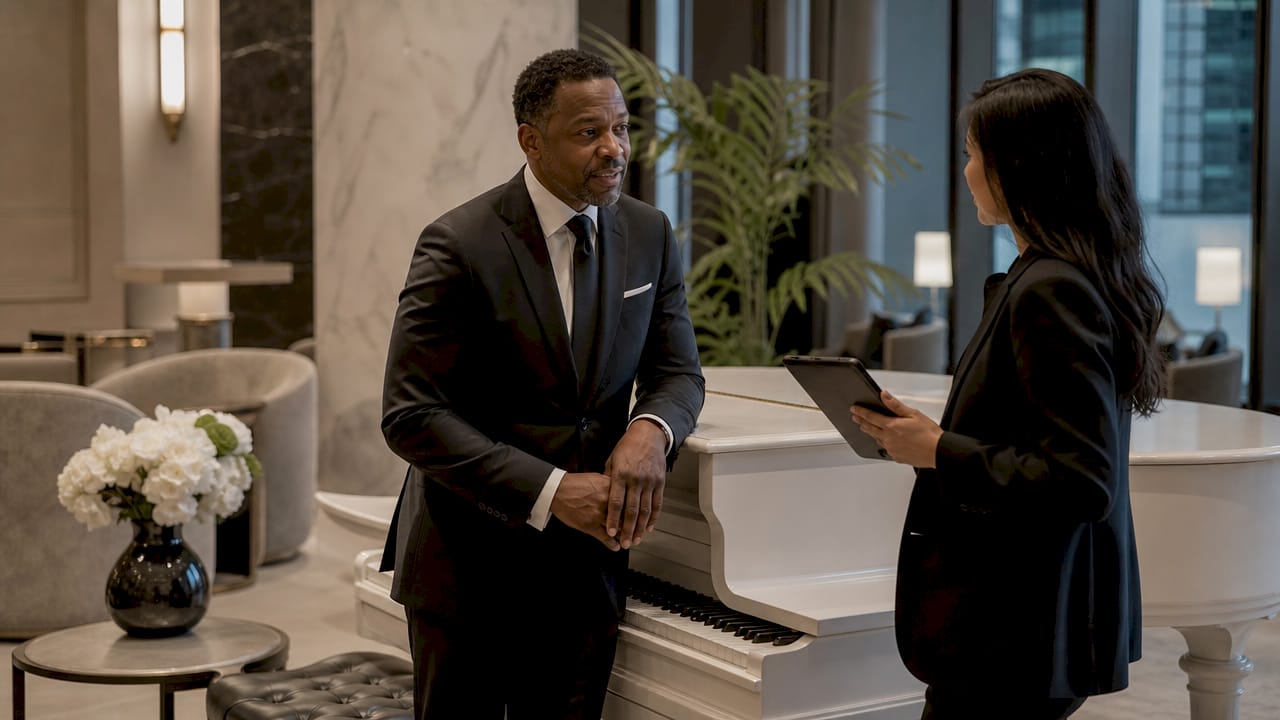
Live piano supports networking, speeches, and formal dining by giving the event planner a real-time tool to manage energy. Need the room to quiet down before a keynote? The pianist fades to a soft, slow passage. Need to lift energy after a long presentation? A brighter, faster piece does it in seconds. No DJ booth, no app, no remote control required.
The role also carries a brand signal. A grand piano on stage at a corporate gala communicates investment, taste, and attention to detail. Guests notice. That perception shapes how they feel about the company hosting the event, before a single executive takes the microphone.
How do pianists read the room and adapt to event dynamics?
Reading the room is the core skill that makes a live pianist irreplaceable at executive events. A pianist watches body language, listens to crowd noise, and adjusts tempo, volume, and style dynamically based on crowd energy. A fixed playlist cannot do this. It plays the next track regardless of what is happening in the room.
Here is how that adaptation looks across a typical corporate gala:
Cocktail hour: Light jazz or classical standards at moderate volume. Guests are arriving and mingling. The music fills silence without competing with conversation.
Dinner service: Slower, softer pieces. The goal is ambiance, not attention. Guests should feel the music without consciously hearing it.
Award presentations: Brisk, upbeat intros for each winner. The pianist watches the emcee for cues and adjusts in real time.
Post-award networking: Energy lifts again. Familiar melodies encourage guests to linger and connect.
Closing: A graceful wind-down that signals the event is ending without making anyone feel rushed.
Each of these phases requires a different musical approach. A pianist who has worked corporate events knows these transitions instinctively. One who has not will play the same style all night, which flattens the guest experience.
Pro Tip: Brief your pianist before the event with a written timeline. Include the name of the emcee, the order of speeches, and any specific cue points. Five minutes of prep prevents awkward silences and mistimed music.
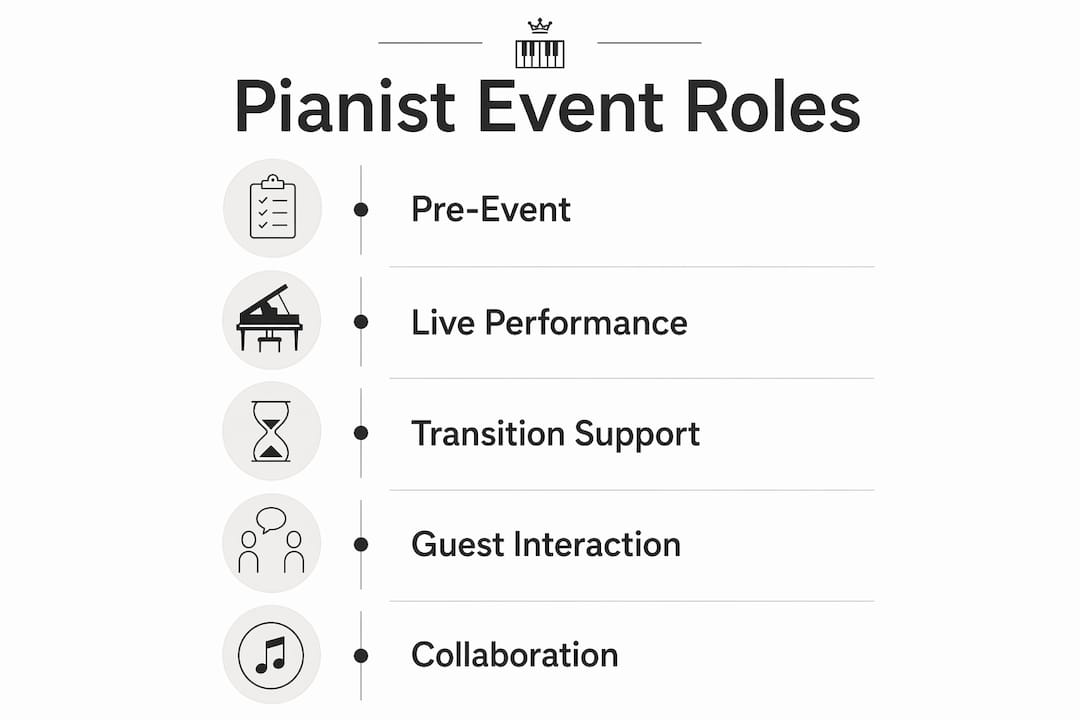
The difference between a great event and a forgettable one often comes down to these micro-transitions. A pianist who adapts music dynamically keeps guests engaged without them ever realizing why they feel so comfortable.
How does a pianist support award ceremonies, product launches, and speeches?
Award ceremonies are where the role of pianist at executive events becomes most visible and most technical. Professional pianists provide real-time audio adaptation that playlists cannot match. They play walk-up music for each winner, hold soft notes during introductions, and stop instantly when a speaker steps to the microphone.
That last point matters more than most planners realize. A playlist cannot stop on a dime. A pianist can. That split-second responsiveness is what keeps a ceremony feeling tight and professional rather than clunky and amateur.
Pianists also coordinate with emcees to cue music for awards and speeches, functioning as live production assistants. This coordination reduces stress on the event planner during the moments that matter most. The emcee gives a nod, the pianist plays. The speaker finishes, the pianist fades back in. No one has to run to a laptop.
The table below shows how live piano transitions compare to automated music systems at key event moments:
Event moment | Live pianist | Automated music system |
Award winner walk-up | Custom music, real-time start and stop | Pre-set track, manual trigger required |
Speaker introduction | Soft hold, instant fade on cue | Fixed volume, no live adjustment |
Applause bridge | Fills gap naturally with improvisation | Silence or awkward track overlap |
Unexpected delay | Extends or modulates seamlessly | Loops or cuts out |
Energy shift mid-event | Immediate tempo and style change | Requires manual playlist change |
Pro Tip: Schedule a 15-minute pre-event rehearsal with the pianist and emcee together. Walk through every cue point. This single step eliminates the most common source of timing errors at award ceremonies.
Product launches follow a similar logic. A pianist can build tension before a reveal, then explode into a celebratory piece the moment the product appears. That kind of live scoring is what turns a product reveal into a moment guests remember and talk about.
How do interactive piano elements boost guest engagement?
Interactive piano segments transform guests from passive observers into active participants. This shift is especially valuable at holiday parties, engagement parties, and corporate galas where the goal is connection, not just entertainment.
The most effective interactive formats include:
Live song requests: Guests call out titles and the pianist plays them on the spot. This creates spontaneous, personal moments that no playlist can replicate.
Sing-alongs: The pianist leads familiar songs and invites guests to join in. Works exceptionally well at holiday parties where seasonal classics are universally known.
Dueling pianos format: Two pianists take requests and play off each other competitively. High energy, highly memorable, and ideal for larger corporate galas.
Background to foreground shifts: The pianist transitions from quiet background music to a featured performance at a designated moment, drawing the room’s attention naturally.
The impact on guest satisfaction is real. One event with 200+ guests hired the same pianist for 10 consecutive years because the interactive experience became a defining feature of their annual holiday party. That kind of repeat booking reflects genuine guest demand, not just planner habit.
Interactive piano also benefits corporate event engagement by giving guests a shared experience to talk about. Shared experiences accelerate networking. When guests laugh together during a sing-along or cheer for a live request, they form connections faster than they would over a standard dinner.
The role of pianist at a luxury party or engagement party shifts slightly toward entertainment and away from pure atmosphere. Planners should communicate this shift clearly so the pianist knows when to step forward and when to step back.
What are the logistics of integrating a pianist into an executive event?
Logistics determine whether a great pianist delivers a great performance or spends the first hour troubleshooting a sound system. Get the technical details right early.
Confirm the instrument. Ask whether the venue has a piano and whether it is in tune. If not, a professional pianist can recommend reliable local piano rental companies and tuners to secure a quality instrument efficiently.
Verify power and audio needs. Stage pianos with professional amplification require verification of power and audio feed needs well in advance. Confirm the number of outlets, their location relative to the performance area, and whether the venue’s sound system accepts a direct input from the piano.
Map the performance space. The pianist needs a clear sightline to the emcee and the stage. Place the piano where the musician can see cues without turning away from the keyboard.
Build the timeline together. Share the full event runsheet with the pianist at least one week before the event. Include start times, speech durations, and any moments requiring specific music.
Assign a point of contact. Designate one person on the event team to communicate with the pianist during the event. Mixed signals from multiple people create confusion at the worst possible moments.
Clear coordination between event managers and pianists prevents technical awkwardness and ensures smooth transitions. Planning when the pianist fades out or stops for announcements is not a minor detail. It is the difference between a polished event and one that feels improvised.
Pro Tip: Ask your pianist during the booking call what they need from you to perform at their best. The answer will tell you immediately how experienced they are with corporate events.
Key Takeaways
A live pianist at executive events delivers real-time musical control that no automated system can replicate, making the musician a production asset as much as a performer.
Point | Details |
Real-time adaptation | Pianists adjust tempo, volume, and style live, keeping energy aligned with each event phase. |
Production support | Pianists coordinate with emcees to cue music for awards and speeches, reducing planner stress. |
Guest engagement | Interactive formats like sing-alongs and live requests create shared moments that accelerate networking. |
Technical preparation | Confirm instrument quality, power needs, and audio integration at least one week before the event. |
Communication is critical | A written cue sheet shared with the pianist before the event prevents the most common timing errors. |
What I have learned from watching pianists work a room
I have watched a lot of corporate events go sideways at the exact moment they should have been shining. The award ceremony where the wrong track played. The product launch where silence filled the reveal. The gala dinner where the background music was so loud that guests stopped talking to each other. Every one of those failures had the same root cause: the entertainment was treated as decoration rather than infrastructure.
A skilled pianist is infrastructure. The musician holds the room together during transitions, fills gaps that would otherwise feel awkward, and gives guests permission to relax or get excited depending on what the event needs. That is not a small thing. That is the difference between an event that feels effortless and one that feels like it was held together with tape.
The mistake I see most often is planners who brief the caterer in detail and the pianist in passing. The caterer controls the food. The pianist controls the atmosphere. Both deserve the same level of preparation and communication.
If you are planning a corporate gala, a holiday party, or a luxury event in Southern California, the collaboration between planners and musicians is not optional. It is the mechanism that makes everything else work. Treat it that way.
— Petra
Platinumpianist brings live piano to your next executive event
Platinumpianist specializes in corporate event live music for galas, award ceremonies, product launches, and luxury parties across Southern California. Every performance is tailored to the event timeline, with a customizable repertoire built around your program and guest profile.
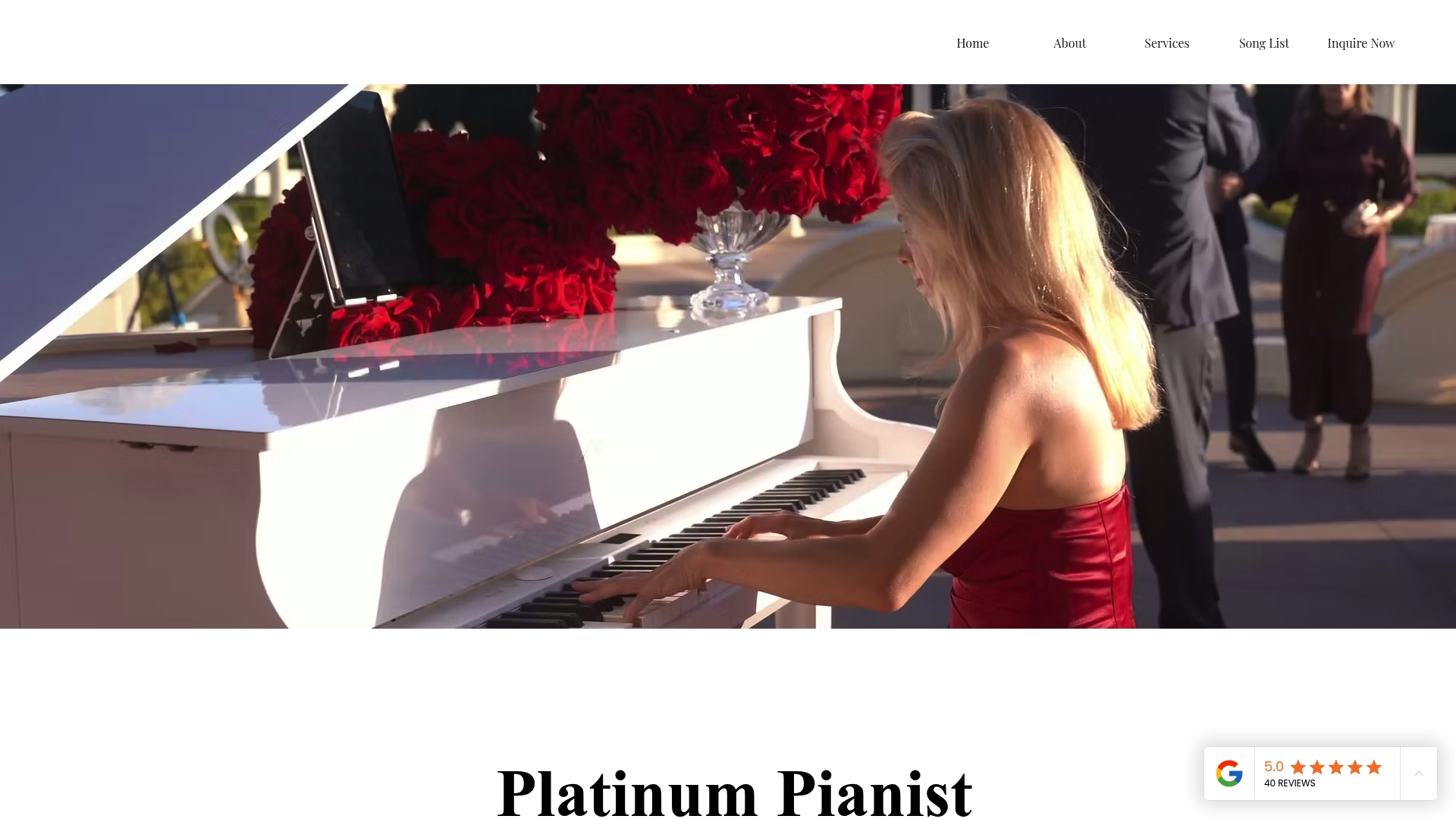
Platinumpianist brings her own piano to every event, which eliminates the instrument logistics that slow down most planners. From Beverly Hills boardroom dinners to large-scale corporate galas, the focus is always on making your event feel polished, connected, and memorable. Reach out to discuss your event details and build a music plan that fits your timeline from the first guest arrival to the final toast.
FAQ
What does a pianist do at a corporate gala?
A pianist at a corporate gala provides live, adaptive music that supports networking, dining, award presentations, and speeches. The musician coordinates with the emcee to cue music in real time, functioning as a live production assistant.
How is a live pianist better than a playlist at executive events?
A live pianist adjusts tempo, volume, and style instantly based on what is happening in the room. A playlist plays a fixed sequence regardless of crowd energy, speaker timing, or unexpected delays.
What technical requirements does a pianist need at an event venue?
Pianists using stage pianos with amplification need confirmed power outlets, an audio feed into the venue sound system, and a clear sightline to the emcee. These details should be confirmed at least one week before the event.
How far in advance should I book a pianist for a corporate event?
Booking three to six months in advance is standard for corporate galas and holiday parties, especially in high-demand markets like Southern California. Early booking also allows time to build a detailed cue sheet and rehearse transitions.
Can a pianist handle both background music and interactive segments at the same event?
Yes. A professional pianist transitions between background ambiance and interactive formats like sing-alongs or live requests within the same event. Clear communication with the planner about when each format is needed makes the shift seamless.
Recommended


