Luxury Wedding Entertainment Explained for Couples

Luxury wedding entertainment is defined as a curated, multi-act experience designed to guide guests through emotional peaks and transitions from ceremony to final dance. Unlike a single band or DJ, it combines multiple live acts, high-end production, and precise coordination into one cohesive program. Luxury wedding entertainment explained correctly means understanding that the music is not the product. The experience is. This guide breaks down every component, from act selection to budget allocation, so you can plan with confidence.
What sets luxury wedding entertainment apart from standard options?
Luxury wedding entertainment differs from standard options in three measurable ways: the number of acts, the production infrastructure, and the level of coordination behind the scenes.
A standard wedding typically features one act, either a DJ or a live band, covering the full reception. A luxury wedding uses multiple specialized acts: a string quartet or acoustic trio for the ceremony, a jazz ensemble or lounge pianist for cocktail hour, a full dance band for dinner and dancing, and a closing DJ to carry the energy through the final hour. Each act serves a specific emotional purpose. The shift from one to the next is not random. It is choreographed.
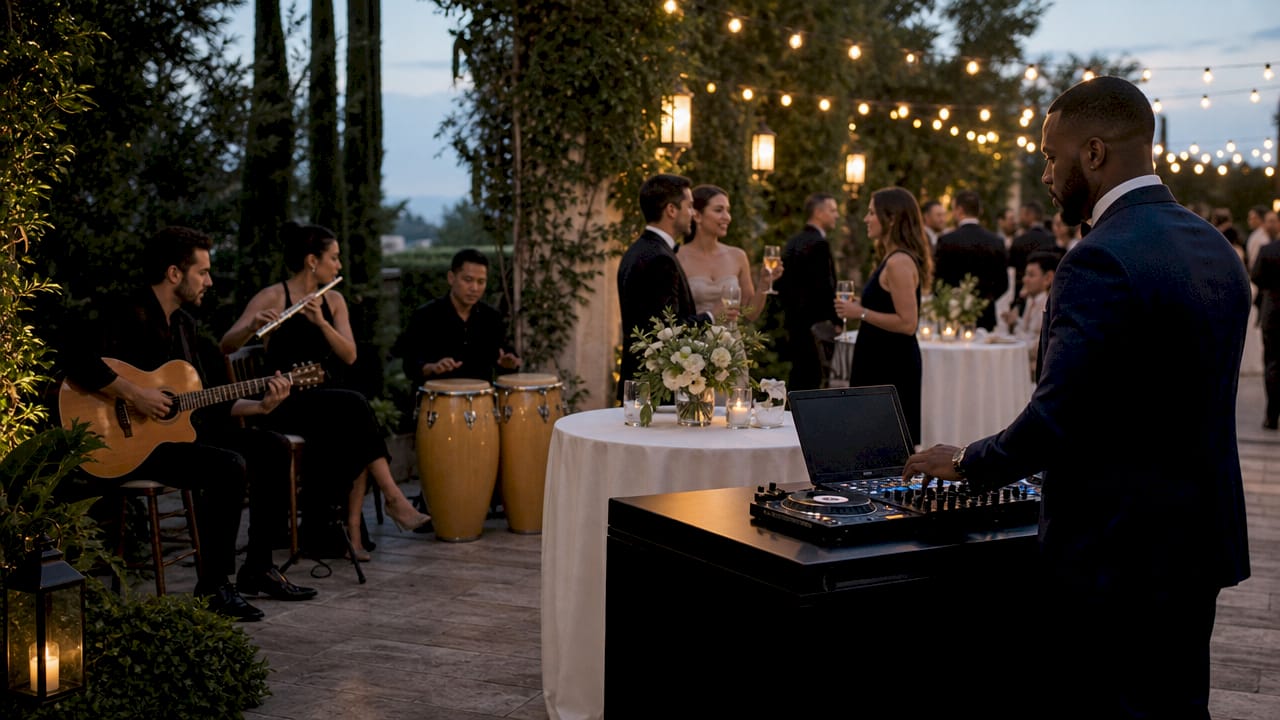
Production quality is the second differentiator. Luxury events use line-array speaker systems, theatrical lighting rigs, dedicated stage design, and a front-of-house sound engineer. Guests feel the difference immediately, even if they cannot name it. Production quality in sound, lighting, and stage design strongly differentiates luxury weddings from standard ones.
The third differentiator is coordination. Every vendor, from the venue manager to the lighting director to the photographer, operates from a shared timeline. One point of contact manages all entertainment transitions. That level of organization prevents the gaps and awkward silences that undercut even the most beautiful venues.
Element | Standard Wedding | Luxury Wedding |
Number of acts | 1 (DJ or band) | 3–4 specialized acts |
Production crew | None or basic | Sound engineer, lighting director |
Planning depth | Song list and timeline | Four-phase planning with 60-day lock |
Cost range | $1,800–$4,500 | $10,000 and above |
Coordination | Self-managed | Single point of contact across all vendors |
Pro Tip: Book your entertainment acts before finalizing your venue layout. Stage placement, power access, and acoustic conditions all affect which acts work in a given space.
How to plan and coordinate luxury wedding entertainment
Luxury wedding entertainment planning follows a structured, phased approach. Improvising the details in the final weeks creates avoidable problems.
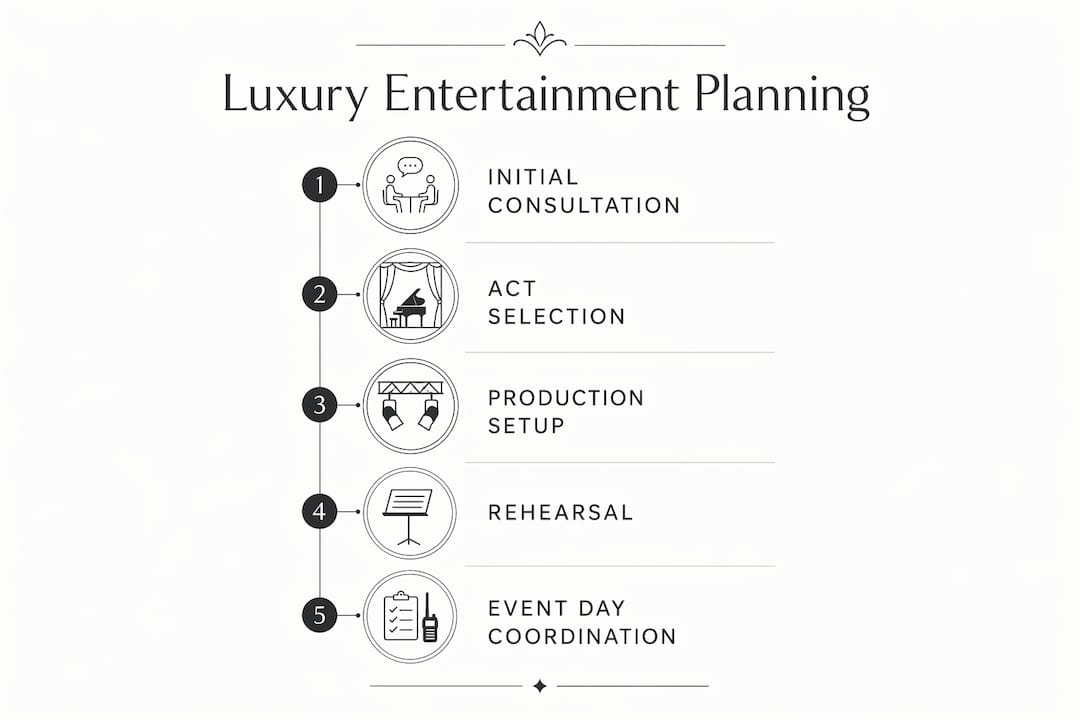
The most effective planning model uses four phases, with a 60-day music lock for final adjustments. This lock date prevents last-minute changes that compromise rehearsal time and sound checks. Locking decisions early gives every act the preparation time they need to perform at their best.
The four planning phases work as follows:
Act selection and venue assessment (12+ months out): Choose your acts based on venue size, acoustic profile, and guest count. Confirm power and stage requirements with each performer.
Music programming and emotional mapping (6–9 months out): Assign specific songs or genres to each moment. Map the emotional arc from ceremony to last dance.
Vendor coordination and timeline building (2–4 months out): Share a master timeline with your venue, lighting team, photographer, and each entertainment act. Identify transition cues.
Final lock and technical rehearsal (60 days out): Freeze the song list and run a technical walkthrough. Send the reception music timeline to your DJ at least two weeks before the wedding.
Your entertainment contracts must go beyond basic performance times. A well-written contract covers:
Exact setup and breakdown windows
Sound system and lighting inclusions
MC services and announcement scripts
Music preference handling and do-not-play lists
Cancellation and weather contingency terms
A DJ contract checklist should specify service times, all inclusions, pricing, cancellation terms, and how music preferences are handled. The same standard applies to every live act you hire. Vague contracts create disputes on the day you can least afford them.
Pro Tip: Assign one person, typically your wedding planner or entertainment director, as the single point of contact for all acts. Fragmented communication between multiple vendors is the most common cause of timing failures at luxury receptions.
What types of high-end acts and production elements create memorable weddings?
The act lineup and production infrastructure work together. Neither delivers the full effect without the other.
Live acts by wedding segment
The most common luxury act lineup by segment runs as follows:
Ceremony: String quartet, solo violinist, or classical pianist playing curated pieces for processional and recessional
Cocktail hour: Jazz trio, acoustic guitar duo, or lounge pianist creating an ambient, social atmosphere
Dinner: Full dance band or a live vocalist with backing musicians, transitioning guests from seated dining to dancing
Late reception: DJ set, often blending into the band’s final set, to sustain energy through the closing hour
Beyond the standard lineup, luxury weddings increasingly feature specialty acts. Strolling aerialists, live painters, interactive musicians who move through the crowd, and illusionists add visual texture between musical segments. These acts work best during cocktail hour or dinner, when guests are moving and mingling rather than focused on a dance floor.
Production elements that change the room
Coordinating multiple entertainment phases is the key to a seamless luxury wedding experience. The production layer makes that coordination visible and audible to every guest.
Line-array speaker systems distribute sound evenly across large ballrooms and outdoor spaces without the volume spikes that come from single-point speakers. Theatrical lighting rigs allow the room to shift from warm and intimate during dinner to high-energy during dancing without a single guest noticing the transition. A front-of-house engineer monitors levels in real time, adjusting for crowd noise, room acoustics, and act-specific needs.
Production design aligns sound, lighting, and stage design to venue architecture for the best possible guest experience. A production team that has worked your venue before knows exactly where the acoustic dead zones are and how to compensate. That knowledge is worth more than any single piece of equipment.
Pro Tip: Ask your entertainment agency for a site visit at least 90 days before the wedding. Venue-specific production planning prevents the day-of surprises that no contract can fix.
What does luxury wedding entertainment cost, and how should you budget?
Entertainment budget allocation is one of the most misunderstood parts of luxury wedding planning. Most couples underestimate the gap between standard and luxury pricing.
The average cost of a live wedding band is $4,500, while the average DJ costs $1,800. Bands cost roughly 150% more than DJs. That figure reflects a single act for a standard wedding. Luxury weddings with multiple acts, production crews, and specialty performers operate at a significantly higher total.
A basic wedding DJ for four hours starts around $3,200 at the luxury tier, with costs rising for longer performance windows and added production. A full luxury entertainment program covering ceremony through late reception, with production, can reach $15,000 to $30,000 or more depending on act count and venue scale.
Entertainment Element | Estimated Cost Range |
String quartet (ceremony) | $1,500–$3,500 |
Jazz trio (cocktail hour) | $2,000–$5,000 |
Full dance band (reception) | $8,000–$20,000 |
Closing DJ set | $3,200–$6,000 |
Production crew and equipment | $3,000–$10,000 |
The most effective budget strategy allocates the largest share to the act that covers the most guest-facing time. For most receptions, that is the main dance band. Hybrid entertainment, combining live musicians with DJ services, grows in popularity because it delivers the energy of a full band during peak moments while reducing total cost. A live band for dinner and first dances, followed by a DJ for the late-night set, gives you the best of both formats.
How to personalize luxury wedding entertainment to reflect your story
Personalization is what separates a memorable luxury wedding from a technically impressive one. Guests remember how the music made them feel, not the brand of the speaker system.
Start with your wedding song list and build outward. Identify three to five songs that carry genuine meaning for you as a couple. These anchor moments, the processional, first dance, and last song of the night, should be non-negotiable. Everything else can flex around them.
Practical personalization strategies include:
Match acts to your aesthetic: A jazz trio fits a Great Gatsby-themed ballroom. A string quartet fits a garden ceremony. A high-energy dance band fits a rooftop celebration. Mismatched acts break the visual and sonic coherence of the event.
Consider your guest demographics: A crowd with a wide age range needs a set list that spans decades. A younger crowd can sustain a more contemporary program throughout.
Use music to signal transitions: Music shapes mood at every moment of a wedding. A tempo shift signals guests to move from dinner to the dance floor without a single announcement.
Incorporate cultural elements: A traditional song played by a live musician carries more emotional weight than a recorded version. Work with your acts to arrange culturally significant pieces in their style.
Entertainment choices reflect who you are as a couple more directly than almost any other wedding decision. The music program is the one element every guest experiences simultaneously, from the first note of the processional to the last song of the night.
Key Takeaways
Luxury wedding entertainment is a multi-act, production-driven experience that requires phased planning, detailed contracts, and precise vendor coordination to deliver the emotional impact couples expect.
Point | Details |
Multiple acts are standard | Luxury weddings use 3–4 specialized acts, each matched to a specific segment of the event. |
Production quality is felt instantly | Line-array speakers, theatrical lighting, and a live sound engineer define the luxury tier. |
Plan in four phases with a 60-day lock | Freeze music decisions 60 days out to protect rehearsal time and prevent last-minute chaos. |
Contracts must cover operations | Specify setup windows, MC services, cancellation terms, and music preferences in every agreement. |
Personalization drives memory | Anchor three to five meaningful songs to key moments and build the full program around them. |
What I have learned from designing luxury wedding music programs
The most common mistake I see couples make is treating entertainment as the last budget line. They finalize the venue, the florals, and the catering, and then try to fit entertainment into whatever is left. That approach produces technically adequate results and emotionally flat receptions.
Emotional experience design is the real product of luxury wedding entertainment. The music is the delivery mechanism. Pacing, transitions, and act selection are the architecture. When those elements are planned with the same rigor as the menu or the floral design, the result is a reception that guests talk about for years.
The detail that surprises most couples is how much the technical layer matters. A world-class band playing through an underpowered sound system sounds worse than a competent band through a properly engineered rig. Production is not a luxury add-on. It is the foundation that makes every act sound like the best version of itself.
My honest advice: book your entertainment early, lock your music decisions at the 60-day mark, and assign one person to manage all vendor communication. Those three decisions eliminate the majority of day-of problems I have ever seen at luxury receptions.
— Petra
Live piano for your luxury wedding celebration
Platinumpianist brings a grand piano directly to your venue in Southern California, creating a live music experience that works from ceremony through cocktail hour without requiring a full band setup.
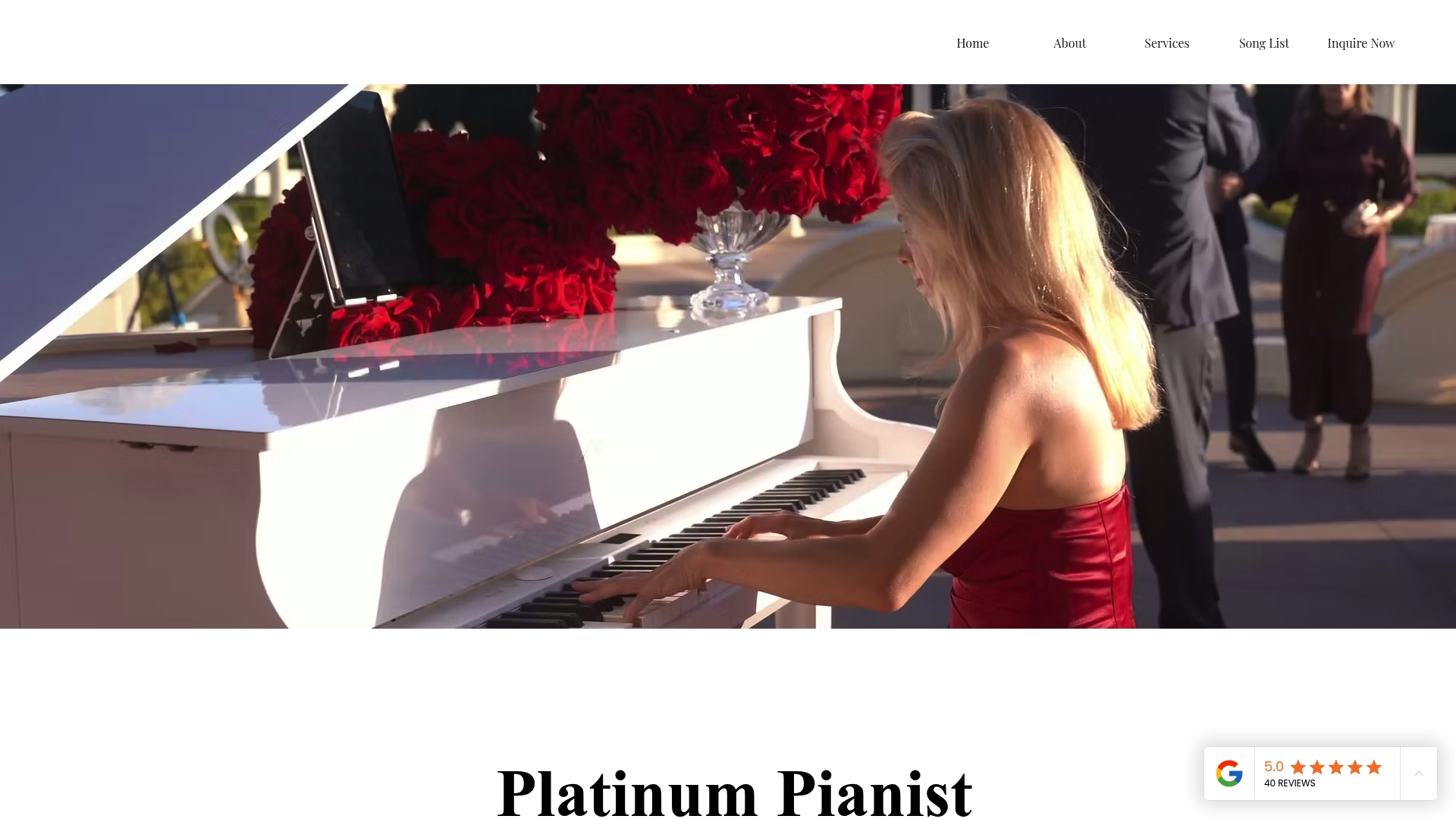
Whether you are planning a Beverly Hills ballroom reception or an intimate backyard celebration, Platinumpianist offers tailored music programming built around your timeline and aesthetic. Every performance is coordinated with your venue and vendors to fit the wedding ceremony to reception flow you have planned. For couples who want a Beverly Hills pianist with the production quality and planning depth that luxury weddings require, Platinumpianist is available for consultations and custom program design. Reach out to discuss your date and vision.
FAQ
What is luxury wedding entertainment?
Luxury wedding entertainment is a curated, multi-act program that combines live performances, high-end production, and precise coordination to create an emotionally paced guest experience from ceremony to final dance.
How much does luxury wedding entertainment cost?
The average live wedding band costs $4,500 and a DJ costs $1,800, but a full luxury program with multiple acts and production crew typically ranges from $15,000 to $30,000 or more depending on act count and venue scale.
How far in advance should you book luxury wedding entertainment?
Book entertainment acts 12 or more months in advance for peak dates. Lock your final music decisions 60 days before the wedding to protect rehearsal time and prevent last-minute changes.
What acts are included in a luxury wedding entertainment program?
A standard luxury lineup includes a string quartet or pianist for the ceremony, a jazz trio for cocktail hour, a full dance band for the reception, and a DJ for the late-night set.
What should a luxury wedding entertainment contract include?
A contract should specify exact setup and breakdown times, all sound and lighting inclusions, MC services, music preference handling, and cancellation terms for every act on the program.
Recommended


