How to Choose Wedding Ceremony Processional Music

You’ve said yes, and now the planning begins. One of the first things that will catch you off guard is how many decisions surround your ceremony music. When you need to choose wedding ceremony processional music, the options feel endless and the stakes feel high. This guide breaks the process into clear, manageable steps so you walk down that aisle to exactly the right song, at exactly the right moment, without second-guessing yourself.
Table of Contents
Key Takeaways
Point | Details |
Know your music segments | The processional is just one of five ceremony music moments; understanding all of them helps you plan the full picture. |
Match tempo to your walk | Songs between 60 and 80 BPM keep your pace natural and your entrance looking effortless. |
Plan two processional songs | Using separate music for the bridal party and the couple’s entrance creates a powerful emotional reveal. |
Cue points matter most | Starting a song at the right melodic moment matters more than the song title itself. |
Rehearse with the music | Walk the aisle during rehearsal with your actual songs playing to confirm timing before the wedding day. |
How to choose wedding ceremony processional music
Before you can pick songs, you need to understand what the processional actually is and where it fits in the ceremony. The processional is the formal term for the music played as the wedding party walks down the aisle toward the altar or ceremony space. It is one of several distinct musical segments in a ceremony, and confusing them leads to poor planning.
Here is how the full ceremony music program typically breaks down:
Prelude: Background music played as guests are seated, usually 20 to 30 minutes before the ceremony begins.
Processional: Music for the entrance of the wedding party, officiant, and then the couple.
Ceremony music: Interludes during readings, unity rituals, or moments of reflection.
Recessional: The celebratory exit music after the ceremony concludes.
Postlude: Soft background music as guests leave their seats.
Most couples choose 2 to 3 processional pieces plus a recessional for their ceremony. The processional is often split into two parts: one song for the bridal party and flower girls, and a separate, more emotionally charged song for the bride, groom, or both partners walking in together.
One thing many couples overlook: venue and religious restrictions. Catholic ceremonies require sacred character music during the Mass, and many houses of worship have a music director who must approve your selections. Always check before you fall in love with a song.
A step-by-step approach to song selection
Choosing the right processional songs becomes much easier when you work through a simple framework rather than scrolling through playlists hoping something feels right.
Define your wedding’s overall tone. Is your ceremony formal and traditional, relaxed and garden-style, or boldly modern? Your processional should feel like the opening note of that story. A beachside ceremony in Malibu calls for something different than a cathedral wedding in downtown Los Angeles.
Assign music to each procession role. The flower girl and ring bearer often enter to something lighter and playful. The bridal party typically walks to a fuller, more structured piece. The couple’s entrance deserves the most emotionally resonant song of the three.
Check the tempo. The ideal processional tempo is 60 to 80 BPM for a natural walking pace. Songs outside this range either make you feel rushed or force an awkward shuffle. You can look up any song’s BPM on a free online tool in seconds.
Consider instrumental versions. A song you love from a movie or a pop album can feel out of place with lyrics in a ceremony setting. A piano or string quartet arrangement of the same song preserves the emotion while fitting the atmosphere perfectly. This is one of the most underused tricks in wedding processional song selection.
Measure the song against your aisle. Count the number of people in your processional and estimate how long each walk takes. A short aisle with six people may only need 90 seconds of music. A long cathedral aisle with a large bridal party could require four minutes or more.
Pro Tip: Download your processional songs and time yourself walking the actual aisle length during rehearsal. If the song ends early, plan a repeat section. If it runs long, identify a natural stopping point in advance.
Timing, cueing, and transitions
Getting the song selection right is only half the work. How and when the music starts determines whether your entrance lands as a genuine moment or just background noise.
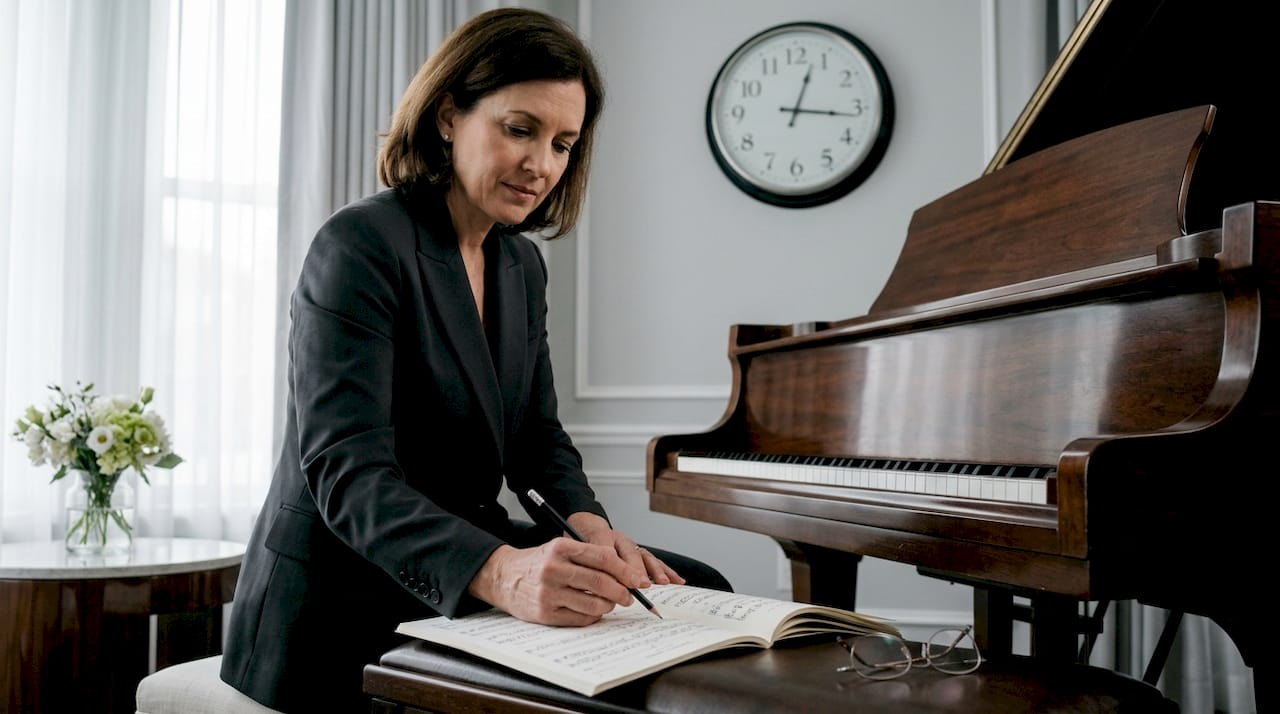
Many processional songs have 20 to 45 second intro buildups before the melody kicks in. If your DJ or musician starts the song from the very beginning, you may be halfway down the aisle before the emotional peak arrives. The fix is simple but almost nobody does it: identify the exact second in the track where you want the music to begin, and communicate that cue point clearly to your music team.
Think of it like a choreographed moment. The starting cue inside the track often matters more than which song you chose. A beloved song started at the wrong point falls flat. A simple, familiar melody started at the right moment can bring an entire room to tears.
When using two songs, the handoff between them requires just as much attention. A clean, no-dead-air transition is crucial when switching from the bridal party song to the couple’s entrance song. There should be no awkward silence, no fumbling with a phone, and no confusion about who cues whom. Discuss this transition explicitly with your DJ or live musician before the wedding day.
“Pre-planning setlists and cue sheets with your musicians prevents awkward silences or rushed moments on the wedding day.” Ceremony music planning professionals recommend providing a written cue sheet that lists song titles, start times within the track, and the exact visual or verbal signal that triggers each piece.
Rehearsing with the actual music playing ensures the song length matches the aisle walk duration, preventing gaps or early arrivals at the altar. This step alone eliminates the most common ceremony music problems.
Pro Tip: Give your musician or DJ a printed cue sheet, not just a verbal rundown. Include the song title, the timestamp to start from, and the signal they should watch for. A confident cue is a seamless entrance.
Creative ideas for your processional
Once you understand the mechanics, the fun part begins. The best wedding entrance music reflects your love story, and there is no single right answer.
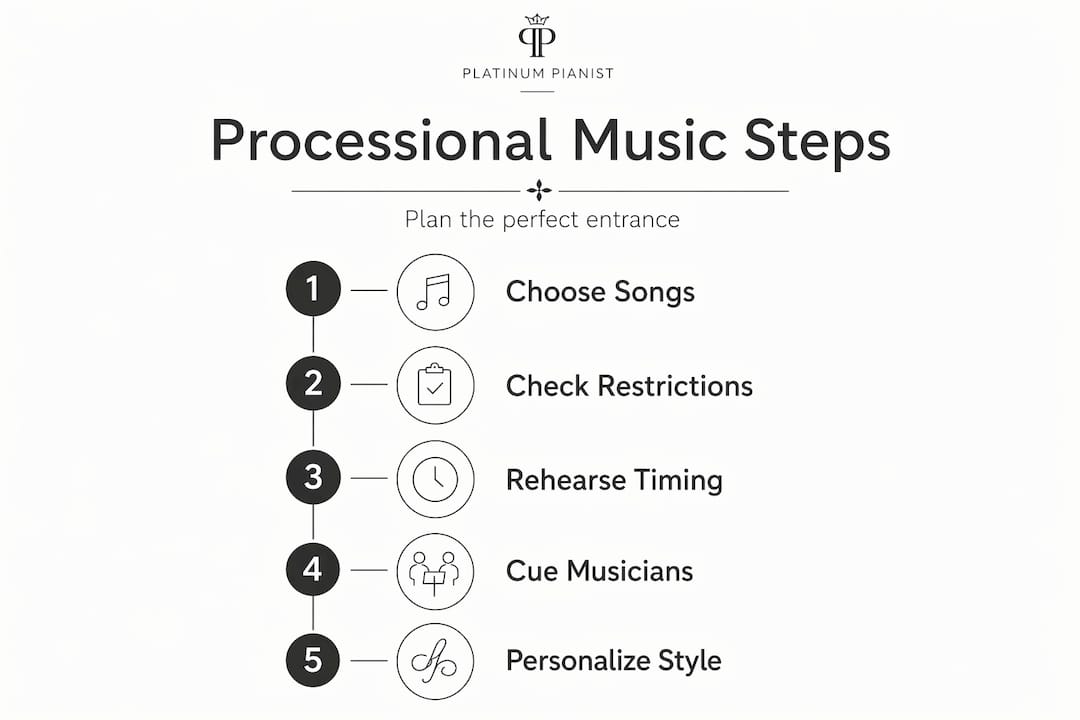
Here is a quick comparison of the three main approaches couples take:
Style | Examples | Best for |
Traditional classical | Pachelbel’s “Canon in D,” Wagner’s “Bridal Chorus,” Handel’s “Water Music” | Formal, religious, or timeless ceremonies |
Contemporary instrumental | Piano covers of Coldplay, John Legend, or film scores | Modern couples who want emotion without lyrics |
Personal and non-traditional | A favorite movie theme, a folk song, a meaningful pop track | Couples who want the ceremony to feel unmistakably theirs |
More couples are blending traditional and modern styles to create a ceremony soundscape that feels both familiar and personal. A common approach: use a classical piece for the bridal party entrance, then switch to a meaningful contemporary song for the couple’s walk. Starting with classical then switching to a favorite love song adds drama and a genuine emotional arc.
For same-sex couples or ceremonies with two partners walking in simultaneously, consider songs with a sense of arrival and shared momentum rather than a single focal point. Pieces like Ólafur Arnalds’ “Near Light” or a piano arrangement of “A Thousand Years” work beautifully for this format.
Some other ideas worth exploring:
A live pianist playing a medley that transitions seamlessly between two songs
A neoclassical piece by artists like Ludovico Einaudi or Max Richter for a cinematic feel
A folk or acoustic cover of a song that has personal meaning to your relationship
A film score excerpt, especially if a particular movie holds significance for you as a couple
Personalized music choices make the ceremony memorable not just for you, but for every guest in the room. When people recognize a song you love, they feel invited into your story.
My honest take on processional music decisions
I’ve played hundreds of wedding ceremonies as a pianist, and I’ll tell you what I’ve observed: couples spend weeks agonizing over which song to choose and about five minutes thinking about how it will actually be executed on the day.
The song matters. But the cue point, the transition, and the communication with your music team matter just as much. I’ve seen a perfectly chosen song fall flat because it started at the wrong moment. I’ve also seen a simple, modest piece become unforgettable because the timing was flawless and the room was ready.
What I’ve learned is that live music changes the experience in a way that recorded tracks rarely can. There is something about hearing a real instrument respond to the room, to the light, to the moment, that makes guests lean forward. It doesn’t just fill the space. It holds it.
My advice: stop chasing the “perfect” song and start focusing on the perfect execution. Pick something that genuinely moves you, communicate your vision clearly to your musician or DJ, rehearse with the actual music, and then let yourself be present. You’ve done the work. Trust it.
— Petra
Live piano music for your ceremony
Planning your processional is one thing. Hearing it performed live in your ceremony space is something else entirely.
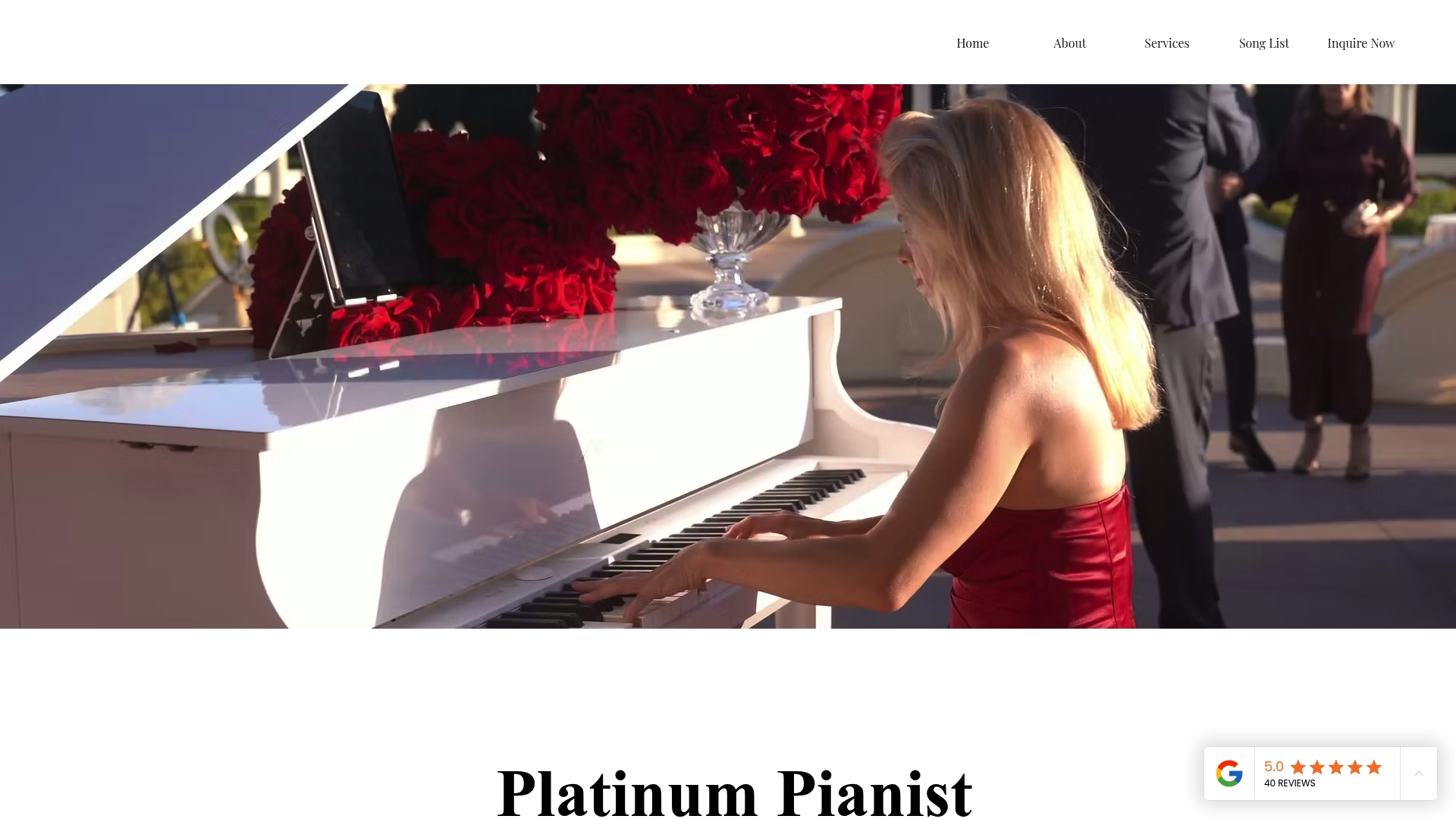
Platinumpianist brings a grand piano to your wedding venue throughout Southern California, including Los Angeles, Orange County, and San Diego. Whether you want a classical processional, a contemporary instrumental cover, or a seamless two-song transition for your bridal party and entrance, Petra works with you to plan every cue, every transition, and every musical moment. From prelude to recessional, your ceremony music is handled with the same care you’ve put into every other detail. Visit the wedding music services page to explore options, or connect directly to start building your ceremony playlist with a live pianist who brings the piano to you.
FAQ
What is ceremony processional music?
Processional music is the music played as the wedding party and couple walk down the aisle at the start of the ceremony. It sets the emotional tone for the entire event and is typically one of the most memorable musical moments of the day.
How many processional songs do I need?
Most couples use two processional songs: one for the bridal party entrance and one for the couple’s entrance. Some also include a separate, lighter piece for flower girls or ring bearers.
What tempo should my processional song be?
The ideal processional tempo is between 60 and 80 BPM, which matches a natural, unhurried walking pace. Songs outside this range can make the walk feel rushed or awkward.
Can I use a pop song for my processional?
Yes, and an instrumental or piano version often works better than the original recording in a ceremony setting. It preserves the emotional connection to the song while keeping the atmosphere appropriate for the moment.
How do I avoid awkward timing during the processional?
Walk the aisle during rehearsal with your actual songs playing, and provide your musician or DJ with a written cue sheet that includes the exact start point within each track. This prevents dead air, early arrivals at the altar, and timing surprises on the wedding day.
Recommended


